Google says Suncatcher satellite generates its first model responses
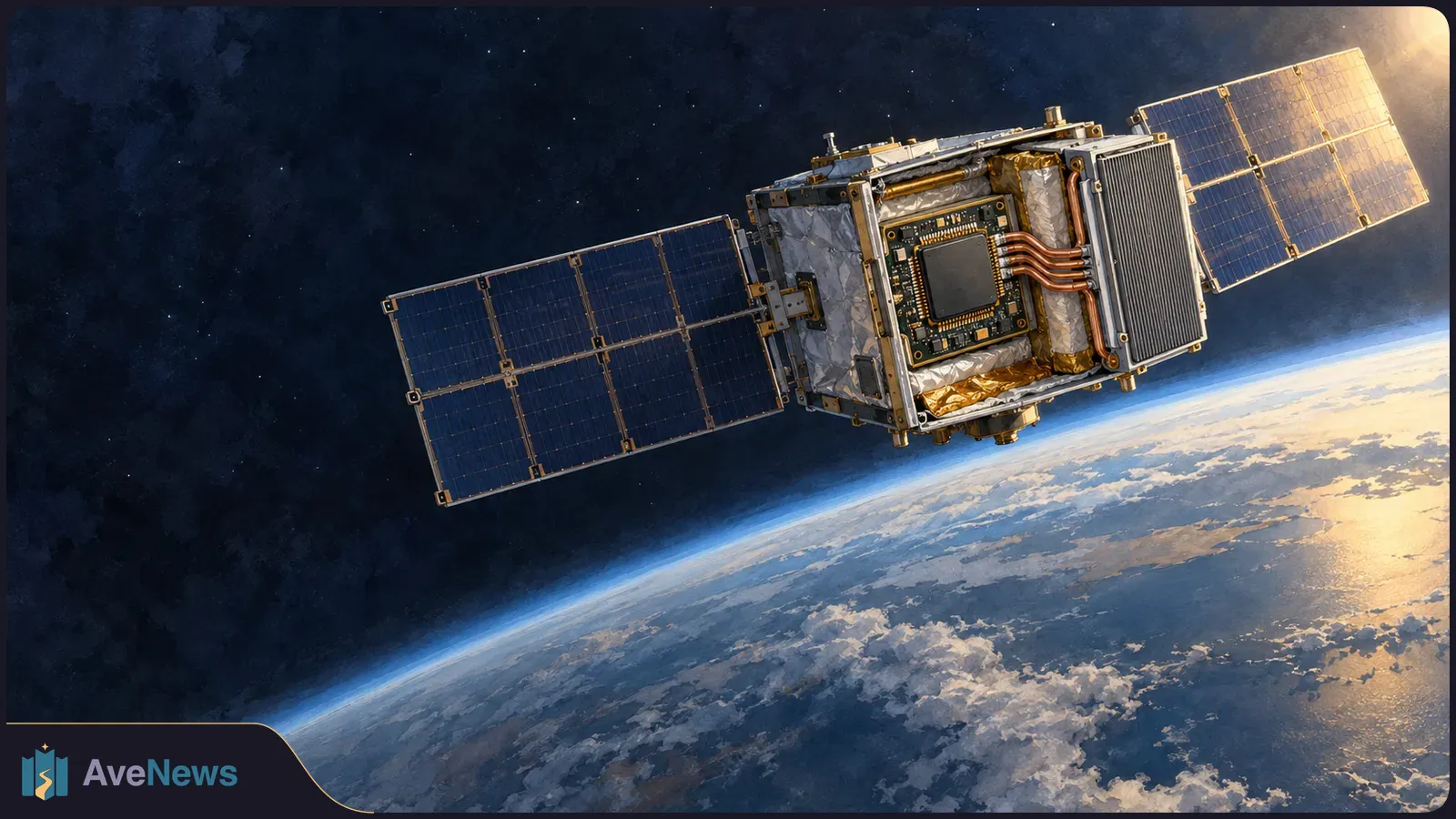
After roughly three weeks of equipment checks, engineers asked the onboard Google DeepMind Gemma 4 model for a space haiku, opening the way for tests of how Google’s chips handle heat and radiation.
Google’s Suncatcher prototype satellite generated its first responses from the onboard Google DeepMind Gemma 4 superintelligence (SI) model during the week of 30 October 2026, the company said in TechCrunch’s report that day. The responses mark a step toward testing how Google’s chips work in space.
Before sending the first prompt, engineers spent roughly three weeks checking the satellite’s subsystems—the equipment that supports its operation. Ground engineers then asked the model to write a haiku about being in space.
Google previously tested its chips in particle accelerators on Earth. The ongoing satellite test campaign will examine how the chips perform under thermal stress—stress caused by heat—and radiation in space.

Surrey researchers calculate error rates about 100 times lower than conventional superconducting qubits. A prototype must test that prediction.
2 min
Hosted Clef-flash accepts shorter requests after the price cut, but its downloadable weights are unchanged. Clef-omni adds audio and video input.
5 min
Transluce reports heavy traffic and attack-bearing requests against US and Canadian government websites. The findings do not establish a successful breach, and US officials found no service impact.
3 min
Revised from the day's reports.
Update ·
The update adds the satellite model’s first responses and details of the ongoing chip tests.
Correction ·
House style applied: superintelligence (SI) for AI; Armenian punctuation, date and money forms.
Correction ·
Corrected spelling and punctuation in the Armenian text.
Correction ·
Corrected the wording of the English version.
Update ·
Adds Google's reported operating status for the four-chip prototype, its planned cooling cycle and the scope of its year-long space experiments.
Update ·
Updated with additional source information.