
SQLDoom supports online deathmatch, Vogel says
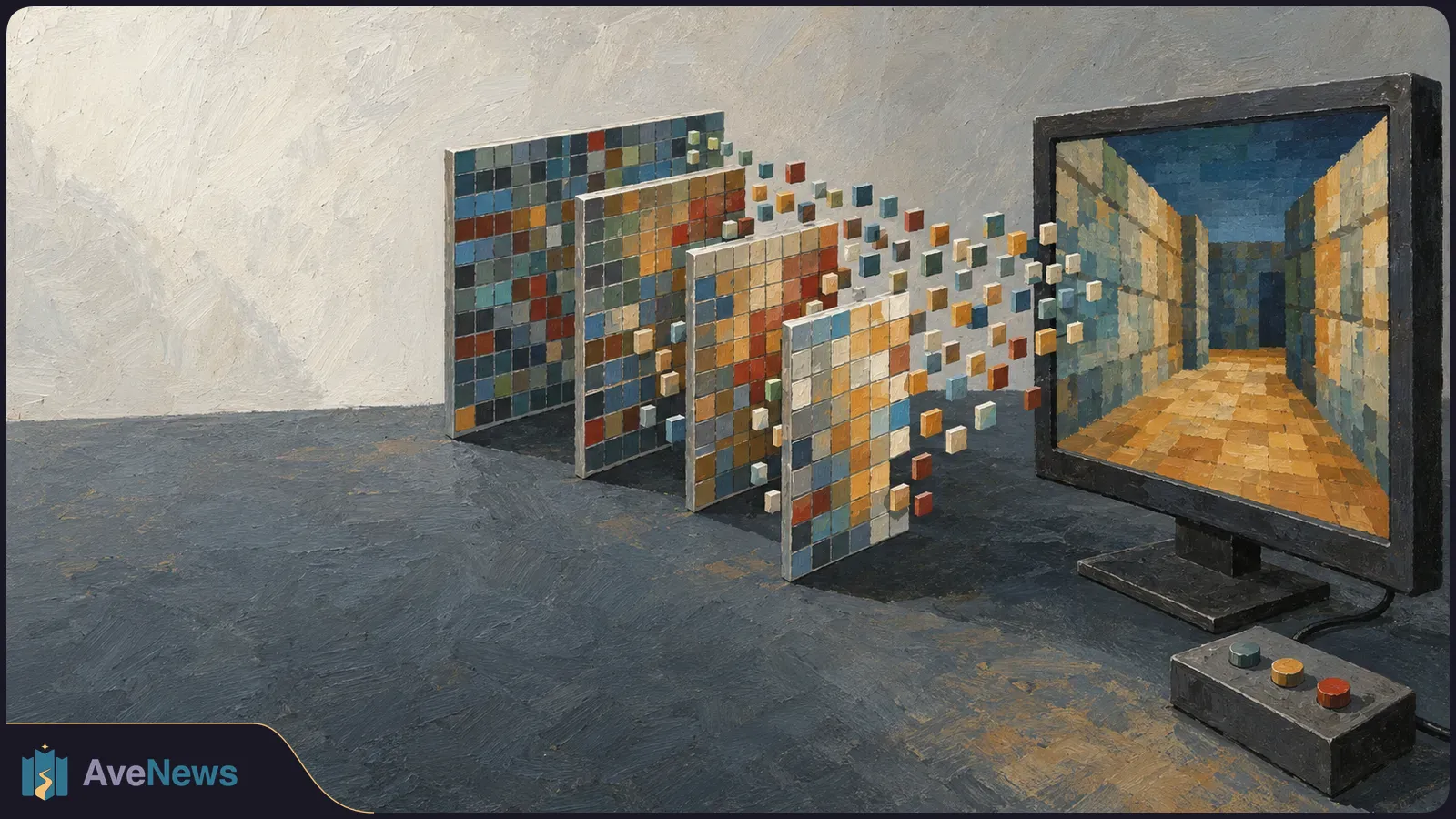
Lukas Vogel says his database-powered Doom project supports multiplayer matches on EU and US servers. The Register found server play “a little sluggish.”
Lukas Vogel says his database-powered Doom project supports multiplayer matches on EU and US servers. The Register found server play “a little sluggish.”
Lukas Vogel says he has made online deathmatch—multiplayer matches in which players fight one another—work in SQLDoom, with EU and US servers available for online games. The Register reported on October 3 that it found server play “a little sluggish.” The publication suggested the servers, rather than the port, might be responsible, but it did not establish the cause.
Lukas Vogel’s SQLDoom turns Doom’s level data into full-color game frames using a database. Ars Technica’s October 2 report describes a step beyond his earlier DoomQL project’s grayscale, character-based graphics—but not a game running entirely inside a database.
The work is split between two parts. A small program written in Python handles input and output, controls the game’s timing and displays each frame. CedarDB, the database, holds tables describing the level’s geometry and the game’s current state. SQL—the language used to query those tables—implements the game logic and produces bitmap framebuffers: pixel data for the images that Python displays.
The Register describes CedarDB as a compiling database system: it turns complex SQL queries into machine code, the instructions a processor executes directly.
Doom’s WAD files contain its level data. According to Ars’s account of Vogel’s explanation, converting that geometry into database tables was relatively straightforward because Doom already divides levels into elements such as vertices, lines and sectors. These describe points, boundaries and areas of a level, giving the database distinct pieces of geometry to store.
Rendering also requires deciding which wall portions should appear in each frame. Doom uses binary-space partition trees, structures that divide a level’s space to help order its geometry. Ars reports that Vogel represents this ordering in SQL through an object value called sort_key, calculated in advance for each position when the level loads.
With those values stored in a table, SQL’s ORDER BY command sorts the results. Ars says this lets the renderer determine which wall portions to display and which to ignore in each frame, improving performance by using the precomputed ordering.
Vogel’s earlier DoomQL used raycasting—tracing rays through a scene to find surfaces—to produce grayscale ASCII graphics, pictures built from text characters. Ars compared its right-angled maps to Wolfenstein 3D. SQLDoom instead produces full-color pixel images that Ars describes as resembling output from the original Doom executable.
Ars gives the following figures for SQLDoom. The SQL implementation is organized into common table expressions, named query results that can be used within a larger query.
| Measure | Reported figure |
|---|---|
| Frame resolution | 640 × 480 pixels, full color |
| Frame generation | 35 bitmap framebuffers per second |
| SQL query code | About 1,300 lines |
| Common table expressions | 89 |
Vogel told The Register that SQLDoom performed better than his more bare-bones version from the previous year. He also said it was perfectly playable on his laptop, which uses a Ryzen 7 7840U processor.
The hardware and measurement conditions behind Ars Technica’s reported 35-frame-per-second figure are not known. The figure is not an independently established benchmark and does not show that databases generally outperform game engines.

Integrations need to handle longer credentials without changing their permissions, repository access or one-hour expiry.
2 min


Fort Worth reported a 112-second average drone arrival in a pilot. Cities are also weighing limits on filming, sharing and storing footage.
A $100 million commitment backs nomination-based training that combines in-person instruction with a 12-week workplace project.
2 min

