
India ordered 129 betting sites blocked using fake court orders
Reuters disclosed on 11 November that two earlier directives to block 129 betting sites relied on forged orders; an Allahabad High Court complaint prompted a police investigation.

In this article
India’s Department of Telecommunications ordered internet providers to block 129 betting websites using forged high court orders, Reuters disclosed on 11 November. The finding concerns earlier blocking directives, rather than a new instruction to remove websites, and has prompted a police investigation.
| Directive date | Websites targeted | Purported judicial authority |
|---|---|---|
| 21 July 2026 | 34 betting websites | Rajasthan High Court order |
| 2 September 2026 | 95 betting websites | Allahabad High Court order |
Courts check the purported orders
Reuters found neither purported order in the courts' online registration records. The Rajasthan High Court’s registrar said the document bearing its name appeared fraudulent and did not exist on its server. The Allahabad High Court determined that the order issued in its name was fake. Police documents said Justice Garima Prashad’s office confirmed that she had issued no such order, although the document bore her name.
The Allahabad document carried the court’s logo, seal and a QR code—a scannable code typically used to check authenticity. Reuters found that the code instead led to a webpage displaying only a case number.
Emails led to official instructions
The department received the purported Rajasthan order in a July 19 email signed “Aryan Chaudhary,” described as an advocate-on-record. Reuters' inquiry to that address bounced back with “Recipient not found,” leaving the sender’s identity unverified. The document invoked a provision of Indian information technology law that permits takedowns in the interest of national security. The department subsequently sent providers its blocking directive.
An August 22 email identifying its sender as advocate Kartikey Pandey supplied the purported Allahabad order. It prompted exchanges among officials, including a request for an action-taken report, before the department instructed providers to block access immediately. Reuters received no response from the email address, leaving that sender’s identity unverified too.
Reuters said forged orders passing through the removal process could affect the online presence of any organization operating in India. The government maintains that it orders online removals only in the public interest to ensure law and order.
Police investigate unknown people
The Allahabad High Court filed a police complaint on 6 November following Reuters' findings. Police case documents said an investigation had begun against unknown people for alleged forgery and cheating. Ghanshyam Yadav, a senior Uttar Pradesh cybercrime official, confirmed that the Allahabad order was fake and said no arrests had been made.
The creators of the forged orders and the method used to produce them remain unidentified, including whether superintelligence (SI) was used. The Department of Telecommunications did not answer Reuters' questions. Both forged documents remained on the department’s website as of 11 November, while the police investigation continued.
Earlier in Politics
 Economy
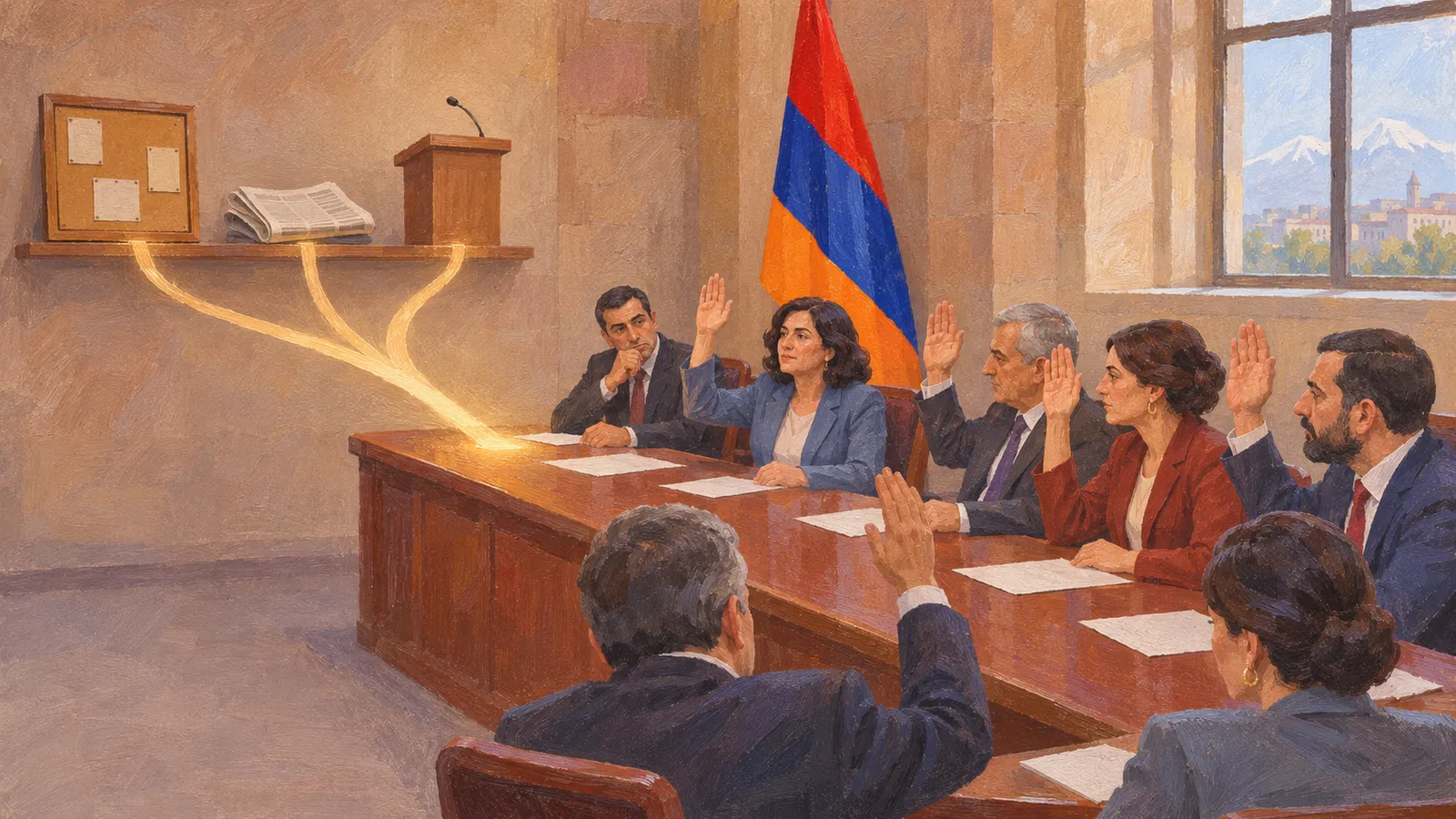
Armenia’s tax contribution bill wins committee backing
The committee voted 5–3 for a bill allowing citizens to direct paid income tax to NGOs, media and political parties. The government would set recipient criteria and contribution limits before the mechanism could operate.
3 min
 Companies
Finland permits Tesla’s assisted driving system provisionally
The transport agency recognized a Dutch approval after Tesla renamed Full Self-Driving (Supervised) and changed its speed controls. Drivers remain responsible for their cars ahead of an EU-wide decision.
3 min
 Companies
Germany’s competition authority challenges PayPal surcharge ban
The Federal Cartel Office says the ban may restrict competition and violate the law. PayPal disagrees with the preliminary finding and can comment before the proceedings continue.
2 min


