
Clean-air researchers estimate 3,560 fire-smoke deaths in Indonesia
The group estimates September’s peak exposure to unhealthy-to-hazardous air at 58 million people and calls for stronger controls on fires and chronic pollution.

In this article
The Centre for Research on Energy and Clean Air (CREA), a Helsinki-based think tank, estimates that fire smoke caused 3,560 deaths in Indonesia in September 2026. The figure estimates deaths attributable to pollution exposure; it is not a confirmed casualty count.
The assessment, released on 29 October 2026 and covered by Al Jazeera on 30 October, estimates that exposure to unhealthy-to-hazardous air reached a record peak of about 58 million people. That is a peak exposure figure, not a cumulative count of everyone exposed during the month.
Severe drought during El Niño sparked the persistent fires. El Niño, the warming phase of a tropical Pacific climate pattern, can bring drought and is associated with higher-than-normal surface air pressure over Indonesia. CREA described August as the start of the fire season and September as the anticipated peak of El Niño-driven dry conditions.
CREA estimates higher deaths and hazardous-air exposure
| Measure | August | September |
|---|---|---|
| Estimated deaths attributable to all air pollution | 3,740 | 5,310 |
| People exposed to hazardous air in Kalimantan on the worst days | 2.8 million | 6.4 million |
CREA estimated a 42 percent increase in total pollution-attributable deaths. Fire smoke accounted for most of September’s total; chronic non-fire emissions from urban and industrial sources accounted for an estimated 1,750 deaths. The assessment gives a 95 percent confidence interval of 4,610–6,080 for the September total, expressing uncertainty around that estimate.
How CREA estimated the deaths
The assessment estimates deaths occurring within days of short-term exposure to fine airborne particles known as PM2.5. It calculates separate contributions from landscape fires and non-fire pollution.
CREA used daily pollution maps from Tracking Air Pollution, a data product developed at Tsinghua University. It adjusted the monthly average pollution map to match measurements from 186 ground monitors across 118 Indonesian cities over a trailing 30-day period.
The researchers weighted provincial exposure by where people live. They then combined those exposure estimates with separate statistical relationships between particle concentrations and mortality for fire and non-fire particles. Provincial baseline mortality came from the Institute for Health Metrics and Evaluation’s Global Burden of Disease 2023 study. These calculations estimate the population’s mortality burden rather than identify individual deaths caused by smoke.
CREA links most pollution deaths in affected provinces to fire smoke
CREA attributed 94–99 percent of air-pollution deaths in four Kalimantan provinces and more than 80 percent in multiple affected Sumatra provinces to fire smoke. It linked worsening air quality there primarily to growing forest and land fires.
Java’s pollution-attributable deaths remained largely tied to urban and industrial emissions, CREA said. The island has a high concentration of non-fire sources, including power generation, industry and transportation.
Al Jazeera also said smoke from Indonesia’s fires had raised pollution levels in Malaysia, Singapore, the Philippines and East Timor.
Government response and CREA’s proposed next steps
Defending its response amid criticism on 28 October, Indonesia’s government said it had deployed more than 72,000 people for firefighting and cloud-seeding operations intended to induce rain. It also said it had activated more than 2,100 doctors and health workers in hard-hit areas and distributed 5.3 million masks.
CREA said President Prabowo Subianto had not declared a national state of emergency when it published the assessment. Officials said regional capacity had not completely collapsed and task forces remained operational, CREA said.
The group cautioned that slower daily increases in respiratory-infection cases did not mean the crisis was over: complications can follow initial exposure, and cumulative cases continued rising while air remained very unhealthy or worse in 25 regencies.
CREA called for immediate disaster-response resources, peatland restoration and penalties for illegal slash-and-burn land clearing. For chronic pollution in places such as Java, it recommended stricter emissions standards for power generation, heavy industry and transportation. It also urged a national clean-air framework requiring public monitoring data, binding air-quality standards, cross-provincial authority and accountability for polluters and regional authorities.
Earlier in Science
 Earth
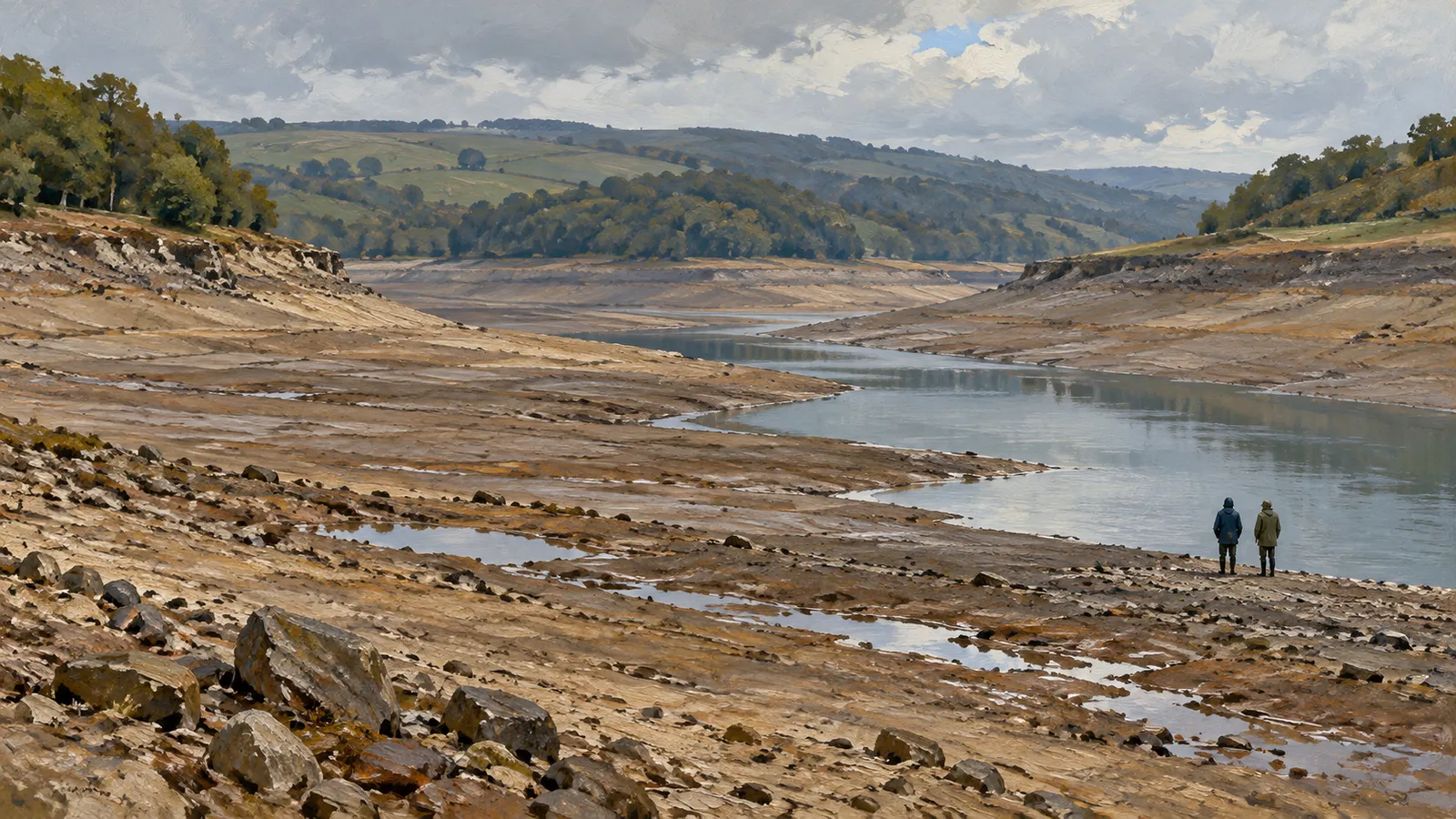
Drought persists across 82% of England, Environment Agency says
South East Water’s Ardingly reservoir is 19% full. The Environment Agency says ending the drought requires rainfall 20% above average over the next six months.
3 min
 General Science
US National Science Foundation left about $1.4 billion unspent in fiscal 2026
The agency awarded its fewest new research grants in decades but says the law still gives it time to spend the approved money.
2 min
 General Science
Archaeologists identify 17 architectural elements at Peru’s El Huarco
Divers organized by Peru’s Ministry of Culture also found submerged settlement walls and objects attributed to the Inca, adding evidence of the coastal settlement’s layout.
3 min


Sources
- Al JazeeraSmoke from wildfires killed 3,500 people in Indonesia in September: Report
- energyandcleanair.orgIndonesia’s air pollution deaths surged by 42% in September as government resists declaring 'karhutla' a national emergency – Centre for Research on Energy and Clean Air
- en.wikipedia.orgEl Niño–Southern Oscillation