Study links leucine to preservation of mitochondrial proteins
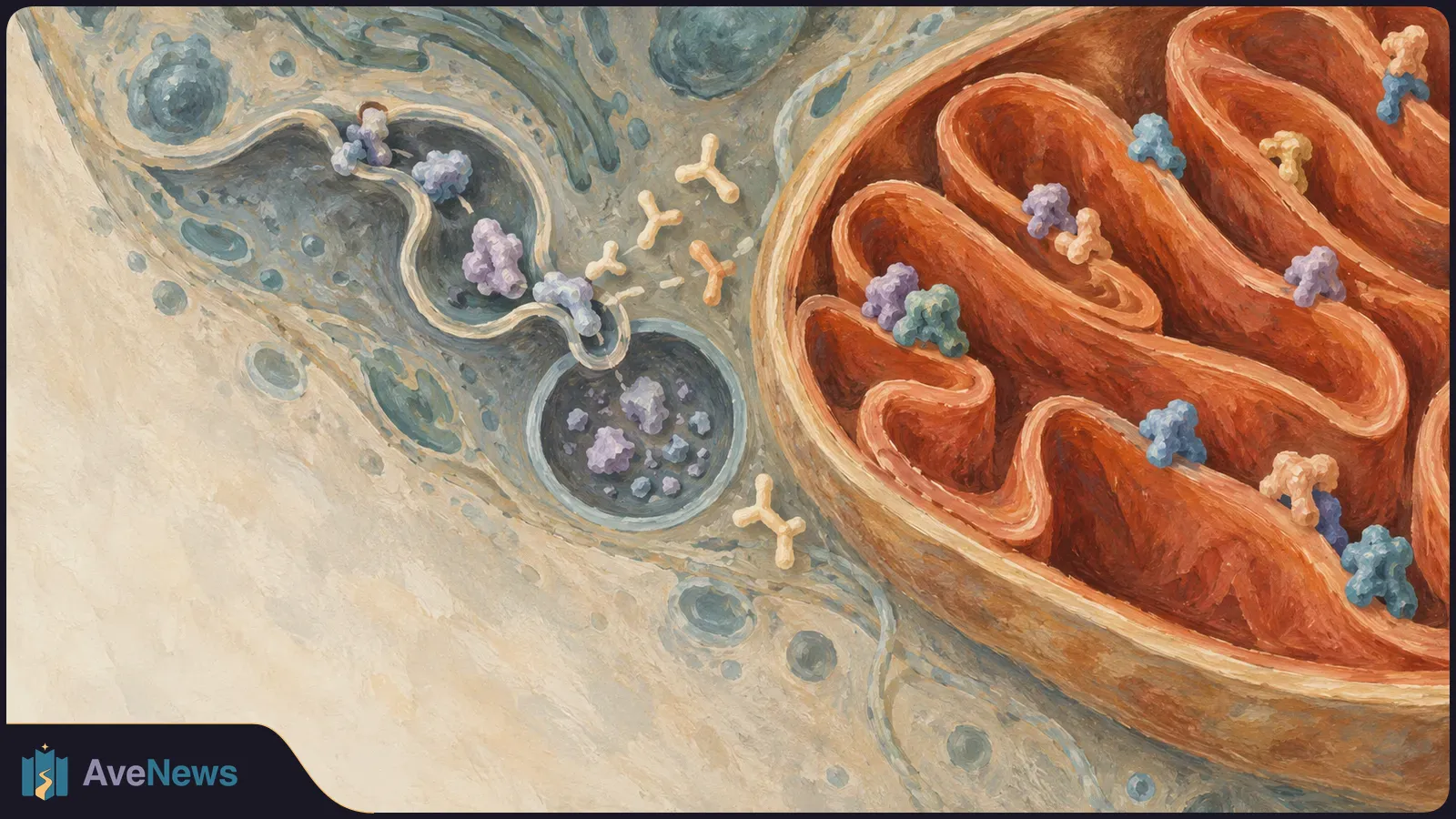
The amino acid appears to slow the removal of proteins that support cellular energy production. The same quality-control system also helps clear damaged proteins.
Leucine can help preserve proteins on the outer membrane of mitochondria, the structures that produce much of a cell’s energy, according to a study published in Nature Cell Biology. ScienceDaily’s October 3 report describes a mechanism that connects nutrient availability with the proteins cells retain to support energy production.
Leucine is an essential amino acid: a building block for proteins that people must obtain through food. Scientists already knew that nutrition influences mitochondrial activity. The less clear question was how individual nutrients signal mitochondria to adjust their activity as a cell’s energy needs and nutrient supply change.
The researchers, led by Thorsten Hoppe at the University of Cologne, traced the effect to SEL1L, a protein involved in cellular quality control. Cells need to remove damaged or incorrectly folded proteins because these can interfere with normal function. SEL1L helps identify proteins for removal and directs them toward breakdown.
According to the researchers, leucine appears to reduce SEL1L’s activity, so fewer proteins on the outer mitochondrial membrane are broken down. These proteins help move molecules into mitochondria for use in energy production. Retaining them can therefore help mitochondria function more effectively and increase the energy a cell produces.
That creates a tradeoff, not a simple case for slowing protein removal. Qiaochu Li, the study’s first author, cautioned that SEL1L also prevents damaged proteins from accumulating, a role important for long-term cellular health. Changing this balance could preserve useful proteins while interfering with the removal of defective ones.
The team also studied Caenorhabditis elegans, a small roundworm commonly used in biological research. In the worms, problems with leucine breakdown disrupted mitochondrial function and were linked to fertility problems. That fertility finding concerns worms, not people.
Separately, the researchers examined human lung-cancer cells. They found that some mutations affecting leucine metabolism—the cellular processes that use and break down leucine—could help those cells survive. This observation suggests that changing leucine-related pathways may affect healthy cells and cancer cells differently.
Whether manipulating this pathway can safely benefit people remains unresolved. The worm and cancer-cell observations do not establish that eating more leucine would improve human fertility or that altering leucine metabolism would treat cancer.
Three suppliers have increased prices. The automatic electricity credit offers one-off support, while a separate £100 heating-oil voucher is means-tested.
3 min

A university president estimates economic damage at 22–30 billion baht, a range dependent on flood conditions improving next week.
3 min

Charcoal, chemical residues and plant fossils trace surface fires and a shift from rainforest to peat bog. Researchers suspect more frequent fires helped sustain that change.
3 min