
Meta reviews its 2030 value-chain net-zero timeline

The company is reconsidering its near-term targets as well, after reporting that its net greenhouse gas emissions rose 45% in 2025 to 11.8 million metric tons of carbon dioxide equivalent.
In this article
Meta said in its 19 November 2026 sustainability report that it is re-evaluating its timelines and interim milestones, including its 2030 value-chain net-zero timeframe and near-term emissions-intensity targets. The latter measure emissions relative to a unit of activity rather than as an absolute total.
The company, then called Facebook, set the value-chain goal in 2020, covering suppliers and activities such as employee commuting and business travel. It separately aimed to reach net-zero emissions from its own operations in 2020. Meta says its long-term net-zero ambition remains unchanged, and the latest report still lists 2030 as the value-chain milestone.
In its 2023 announcement, Meta set a target for the end of 2031 to cut emissions from its operations and purchased electricity (Scope 1 and 2) by 42% and keep value-chain emissions (Scope 3) at or below their 2021 level. Trellis describes the corresponding targets as due in 2030.
Why Meta says it is reviewing the timeline
Rachel Peterson, Meta’s vice president of data centers, and Blair Swedeen, its global head of net zero and sustainability, said the company had expected steady growth and falling clean-energy costs when it set the goal.
The reality has been far more complex.
Meta says demand for superintelligence (SI) infrastructure grew faster than projected, while clean energy and other lower-carbon solutions have not kept pace. It cites queues to connect to electricity grids, permitting delays, slower expansion of transmission lines and supply chains for lower-carbon fuels, materials and hardware that are still developing.
What drove emissions higher
Al Jazeera puts Meta’s reported net emissions total at 11.8 million metric tons of carbon dioxide equivalent. Trellis gives the total as 11.9 million; both publications report the same percentage increase. Carbon dioxide equivalent expresses the warming effect of different greenhouse gases in a common unit.
Quit Big AI reports Meta’s 2024 emissions at 8.2 million metric tons of carbon dioxide equivalent, before carbon-removal credits. The measure covers direct emissions, market-based purchased energy and the value chain; Quit Big AI says Meta applied contractual instruments to parts of its 2024 Scope 3 calculation.
Much of the increase came from purchased goods and services and capital goods, such as equipment and buildings, which Trellis links to data-center expansion. New data centers also drove an increase in electricity consumption.
| Measure | Increase |
|---|---|
| Emissions from purchased goods and services | 36% |
| Emissions from capital goods | 58% |
| Electricity consumption | 35% |
| Emissions from electricity use | Almost 38% |
Meta’s net footprint includes the effect of contractual instruments. Its location-based inventory, which uses average emissions from the grids supplying its electricity, was 21.7 million metric tons of carbon dioxide equivalent. Market-based accounting instead reflects clean-power contracts and certificates. Meta says it prioritizes cutting emissions and expects to use carbon-removal projects for emissions it cannot eliminate.
What comes next
Meta says it helps suppliers cut emissions, including through renewable energy and efficiency measures. The company also says it plans with utilities and pays the full costs of its electricity and grid infrastructure, using arrangements intended to protect other customers from those costs.
Meta says it will share the review’s outcome in a future update; it has not given a decision date or named a replacement deadline.
Follow AveNews
Earlier in Science
 Space
BepiColombo reaches Mercury ahead of planned orbit capture
The European-Japanese mission has arrived at the planet but has yet to enter orbit. On 21 November, the European Space Agency plans to fire four thrusters to place its joined spacecraft in an initial orbit of 590 by 11,640 kilometers.
2 min
 Physics, Maths & Discoveries
Archaeologists excavate 113 tombs at China’s Laohudun cemetery
China’s heritage administration announced the finds on 18 November, including 622 numbered bamboo and wooden slips that record Qin military administration and aspects of everyday life.
3 min
 Space
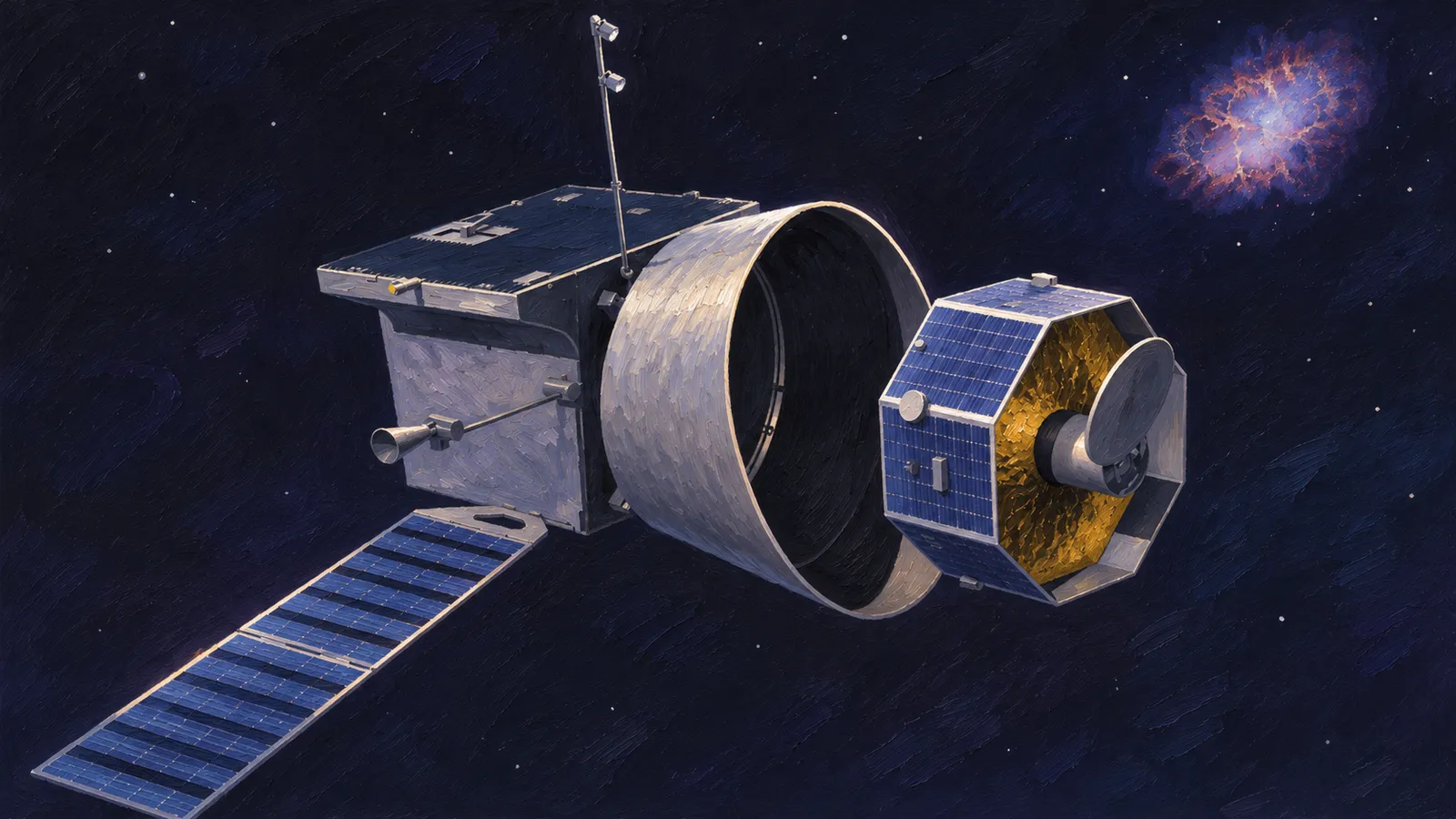
BepiColombo telescope captures first images of Crab Nebula
The Mercury-bound X-ray instrument observed the nebula to check its performance in space, giving scientists a calibration before it studies the planet.
3 min


Sources
Show all 7 sourcesShow fewer
- appistos.grMeta reviews the timetable for its net-zero emissions goal | AppiSToS (opens in a new tab)
- trellis.netMeta contemplates net-zero timeline reset (opens in a new tab)
 Al JazeeraMeta rethinks 2030 climate goals as AI data centres drive emissions up (opens in a new tab)
 about.fb.comStepping Up the Fight Against Climate Change (opens in a new tab)
- sustainability.atmeta.comMapping our Path to Net Zero - Meta Sustainability (opens in a new tab)
- quitbigai.comBig Tech emissions tracker — Quit Big AI (opens in a new tab)
- sustainability.atmeta.comClimate & Energy - Meta Sustainability (opens in a new tab)