
Why OpenAI chose AMD Turin to host Jalapeño
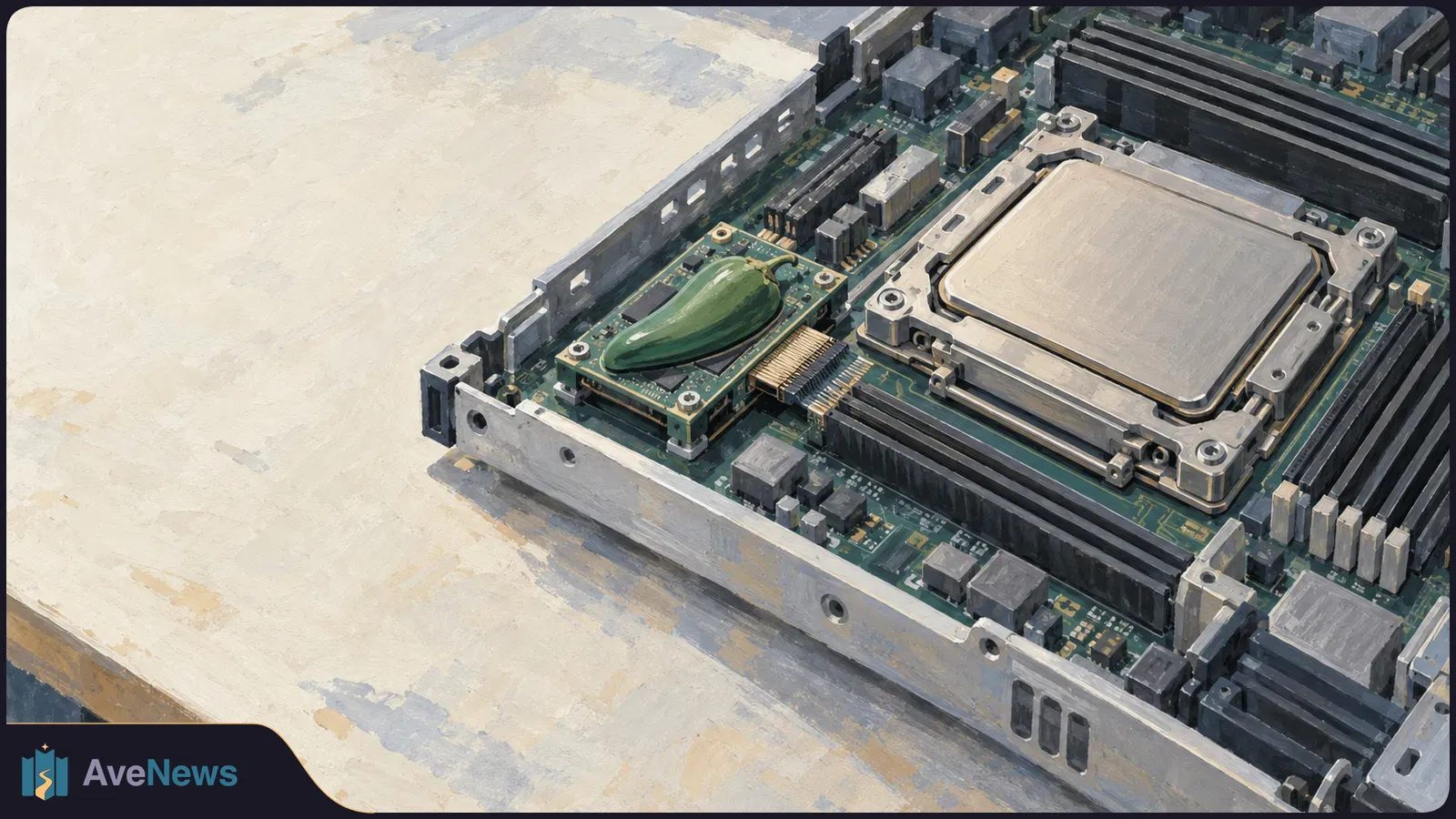
Its hardware chief says the choice favored platform maturity and partners’ experience while limiting implementation risk.
Its hardware chief says the choice favored platform maturity and partners’ experience while limiting implementation risk.
OpenAI is deploying its custom Jalapeño AI chip internally alongside AMD EPYC Turin host processors, each with 1.5TB of memory, Tom’s Hardware reported on October 2, 2026. Richard Ho, OpenAI’s vice president and head of hardware, told the outlet that the approach aimed to enable fast design while reducing implementation risk.
Jalapeño is an application-specific integrated circuit, or ASIC: a chip built for a particular task. Here, that task is SI inference—running an SI model. Turin serves as the host CPU, the server’s main processor paired with the specialized chip. The reported 1.5TB of memory belongs to each host, not to Jalapeño itself.
Ho described Nvidia’s Vera, considered as a standalone CPU, as “a little bit behind on that maturity level.” He said Turin met OpenAI’s needs and that its partners already had experience with it. His explanation centered on pursuing demanding performance and cost goals without taking unnecessary risks.
Vera is Arm-based, while Turin uses x86. These are different families of instruction sets—the commands a processor understands. Tom’s Hardware interprets Ho’s remarks as a comparison between the maturity of these two platforms, rather than a general judgment about Arm versus x86. The outlet also reports that Nvidia lists OpenAI among customers exploring Vera.
The platform choice also has a practical servicing consequence. Tom’s Hardware notes that Vera is board-mounted, whereas Turin processors are socketed, making processor replacement easier with Turin—although such replacements are uncommon in servers.
Analysis
Tom’s Hardware contrasts Nvidia’s claimed per-core advantage for Vera with the much smaller difference in the overall SPEC CPU 2026 result. SPEC CPU 2026 is a suite of tests used to compare processor performance. Dividing the overall score by the number of processor cores answers a different question from comparing the overall scores.
| Measure | Reported Vera advantage over AMD Turin | Basis |
|---|---|---|
| Per-core score | Up to 1.8× | Overall SPEC CPU 2026 score divided by processor core count |
| Overall score | 3% higher | Benchmark-suite comparison with AMD EPYC 9755 |
These figures describe Nvidia’s benchmark comparison, not measurements of OpenAI’s Jalapeño workloads. They do not independently establish which host would perform better in this deployment. How large the internal deployment is, and how it performs in production, remain unclear.

The cuts affected about a fifth of the cybersecurity company’s global workforce. Its 2025 accounts also showed revenue growth alongside a larger annual loss.
2 min

The 15-by-17-millimeter drive fits dedicated slots, combining card-like installation with an SSD interface—but it is not a universal microSD replacement.
3 min

The nondisclosure pledge covers government agencies involved in projects. Annual reporting would also cover efficiency and the share of electricity from carbon-free sources.
4 min
