Loading… Բեռնվում է…
The nondisclosure pledge covers government agencies involved in projects. Annual reporting would also cover efficiency and the share of electricity from carbon-free sources.
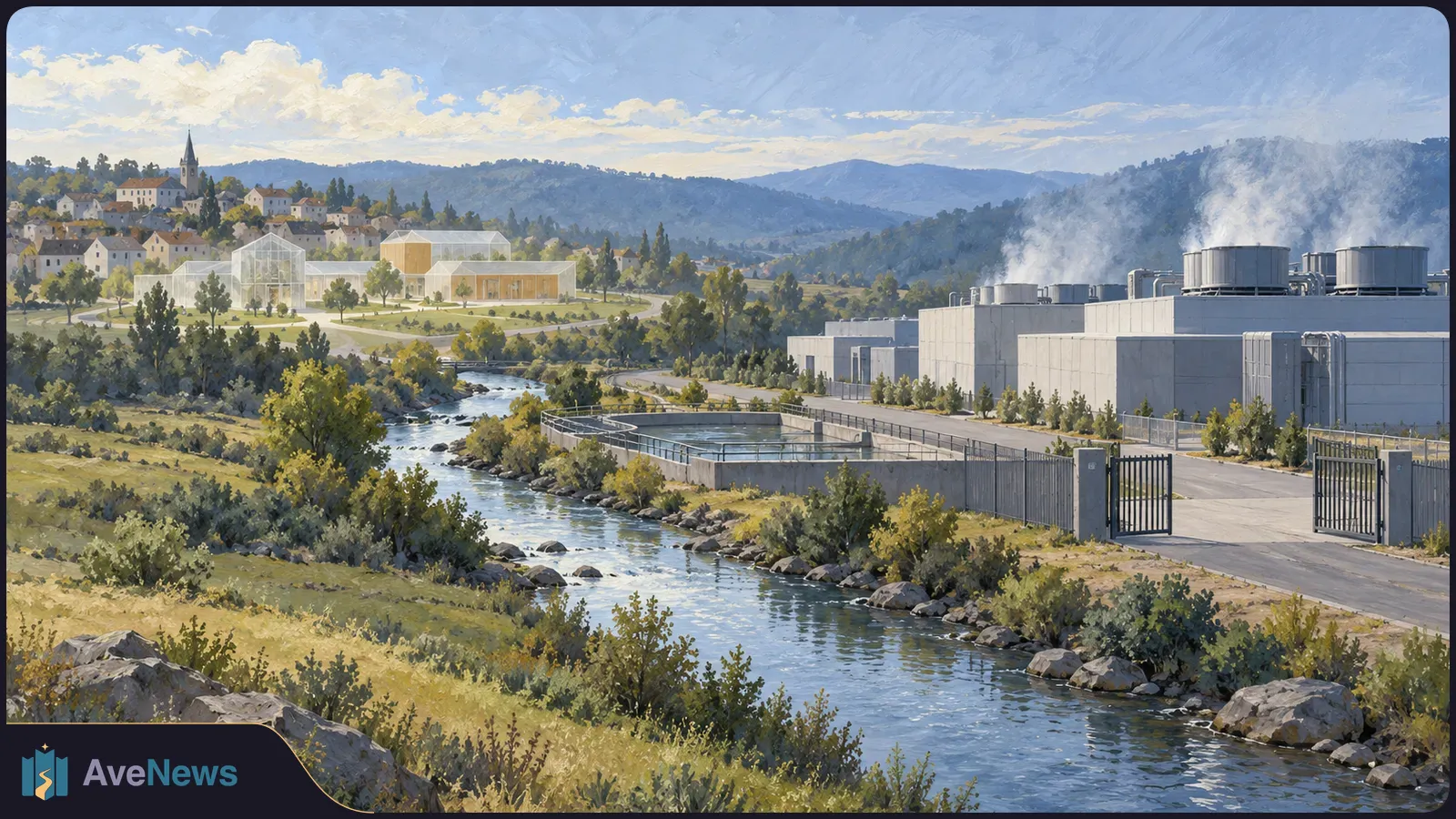
Amazon has committed to stop requiring nondisclosure agreements from government agencies involved in its datacenter projects and to publish annual figures on the facilities’ energy and water use, Tom's Hardware reported on October 5. Nondisclosure agreements restrict information sharing. The pledges are part of Amazon’s Data Center Commitment program, which aims to make development more transparent amid opposition to datacenter construction.
Amazon says its Built Together program for communities hosting its datacenters will cover students’ remaining community-college costs after financial aid for certain certificates and associate degrees, Fortune reported on October 5. The program was announced on October 2. Covered qualifications include programs in heating, ventilation and air conditioning, fiber optics and information technology.
Amazon also plans to fund energy-efficiency upgrades—changes intended to reduce energy use—in homes, schools and community buildings. Its skilled trades centers aim to train workers for jobs with Amazon and its construction partners.
| Measure | Amazon’s stated target |
|---|---|
| Access to community-college support | More than 300,000 students could gain access over five years |
| Skilled trades training | Up to 100,000 workers a year by the end of 2028 |
| Home energy-efficiency upgrades | More than 30,000 homes |
| School and community-building energy-efficiency upgrades | More than 300 schools and community buildings |
Matt Garman, chief executive of Amazon Web Services, said communities would decide how to prioritize the funds, including spending on education, training, energy affordability, water and energy conservation, and local needs. He also reported Amazon’s previous contributions to datacenter communities.
| Period | Amount | Status |
|---|---|---|
| Next five years | More than $1 billion | Announced commitment |
| Preceding three years | More than $1 billion | Past contributions reported by Garman |
The annual disclosures Amazon has pledged would cover energy consumption and efficiency, water consumption and efficiency, and the share of electricity supplied by carbon-free sources, according to Tom's Hardware. Stand.Earth, a global nonprofit working on environmental protections in communities hosting these facilities, told Ars Technica that ending the NDA requirement was promising and could make projects more transparent. But the group said many key community concerns remained unaddressed.
Amazon promised that its datacenters would not exhaust local water supplies. Stand.Earth argued that the company’s promise to replace water used by its datacenters would not address the water consumed by the electricity infrastructure powering them.
That distinction matters because cooling and power generation can both consume water. Datacenters house computing equipment that produces heat. As The Register explains, evaporative cooling removes that heat by turning water into vapor and generally uses less electricity than other cooling methods. Systems that consume less water on site can require more electricity, while power plants that use steam to turn turbines also consume water.
Analysis
Amazon also promised that its datacenters would not increase local power bills. The company says responsible operators work with utilities to pay their share of additional generating capacity and infrastructure upgrades. The Register identifies a remaining risk: if utilities build power plants for demand that never materializes, electricity customers could bear the cost. Higher rates paid by datacenter operators would help only if those facilities actually use a substantial share of the capacity built for them.
Stand.Earth challenged Amazon’s carbon-free-energy claims by pointing to a power plant in Pecos, Texas. The group says Amazon is constructing the plant and predicts it would become the single largest source of climate emissions in the United States. That characterization is Stand.Earth’s claim, not an independently established finding.
The group also disputed Amazon’s description of backup generators, which supply electricity when normal power is unavailable. Amazon says most run for roughly 10 hours a year; Stand.Earth cited cases in which Amazon datacenters ran on diesel backup power for days at a time.
Amazon points to tax revenue as another local benefit. The company estimates that its future tax payments to St. Joseph County, Indiana, will exceed $3 billion; that figure is a forecast, not revenue already delivered.
Amazon says it will work with county officials and community organizations to select local projects, provide annual funding and report outcomes.

Responding to a used-processor buyer’s reported Valorant ban, a Riot specialist disputed claims that other parts were blacklisted. He could not find the player’s support ticket.
3 min

The carriers have named an interim chief executive for their effort to fill mobile coverage gaps, but service timing and pricing remain unclear.
2 min

The flaws could expose storage-administrator credentials or give attackers control of Kubernetes nodes. Dell advises updating CSM and replacing JWT signing secrets.
3 min
 Tom's HardwareAmazon ends secret data center pacts and pledges $1 billion to host towns (opens in a new tab)
 FortuneAmazon’s answer to data center backlash: $1 billion for community college and home energy upgrades (opens in a new tab)
 Ars TechnicaAmazon’s $1B plan to combat data center backlash draws more backlash (opens in a new tab)
 The RegisterShut up and take our money: Amazon plows $1B into quashing datacenter dissent (opens in a new tab)
