
Researchers test magnetic-field explanation for cosmic expansion mismatch
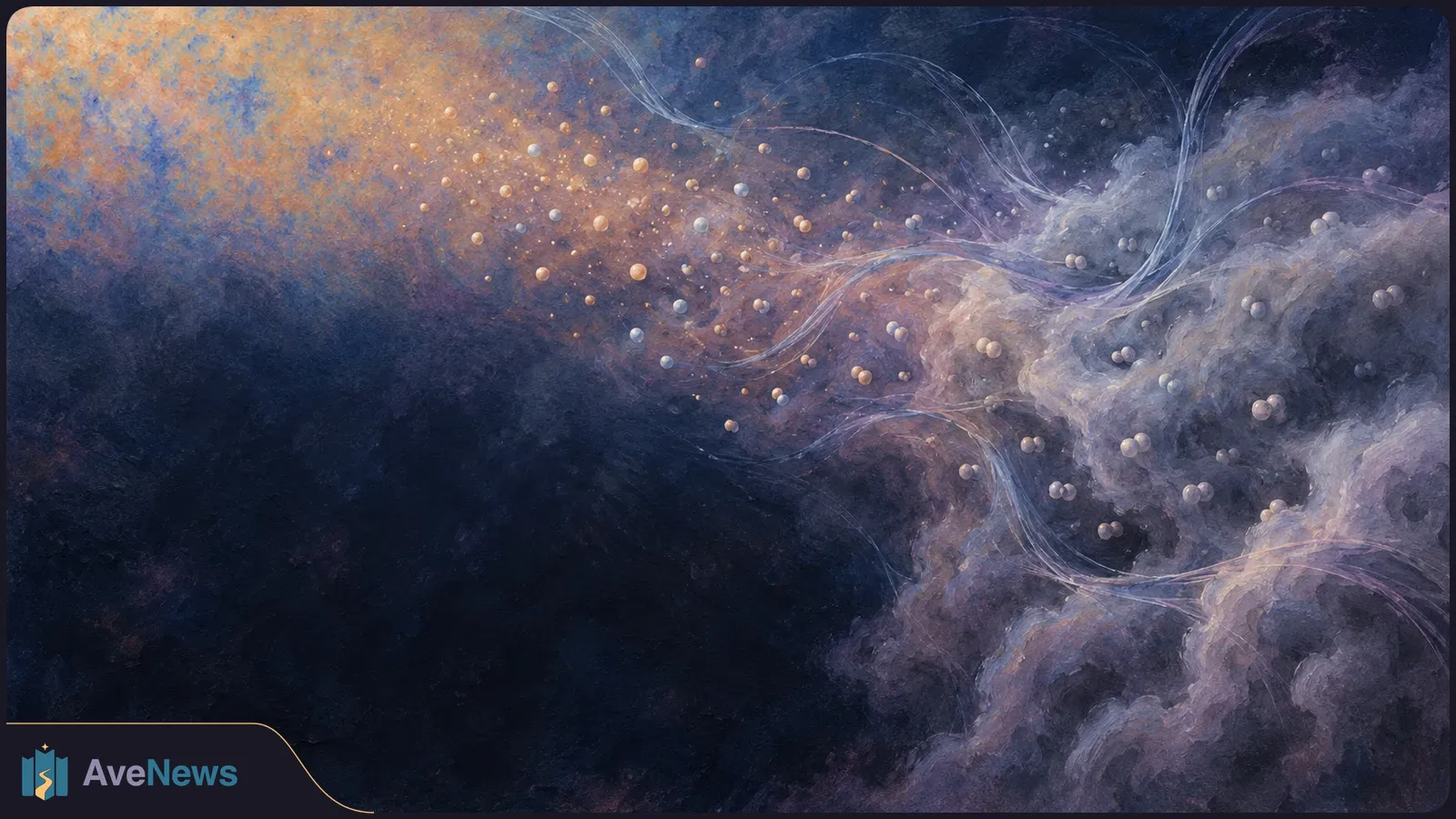
Simulations explore how hypothetical fields from the early universe could change an expansion estimate based on the Big Bang’s afterglow.
Simulations explore how hypothetical fields from the early universe could change an expansion estimate based on the Big Bang’s afterglow.
Extremely weak magnetic fields left over from the early universe could help explain why two ways of estimating its expansion rate disagree, researchers report in an account published by ScienceDaily. Their three-dimensional simulations tested how those hypothetical fields would affect hydrogen formation and, in turn, the ancient light used to infer expansion. The researchers found mild statistical support for the proposal, not a detection of the fields or a solution to the disagreement.
The Hubble constant measures how fast the universe is expanding. Scientists estimate it in two conceptually different ways. One fits a model of the universe to patterns in the cosmic microwave background—the faint afterglow of the Big Bang. The other uses the speeds and distances of galaxies moving away from the Milky Way. Their conflicting answers are known as the Hubble tension.
| Approach | Hubble constant |
|---|---|
| Cosmological model fitted to the microwave background, including measurements by the Planck Space Telescope | About 67 kilometres per second per megaparsec |
| Galaxy speeds and distances estimated using supernova brightness, calibrated with nearby stars | About 73 kilometres per second per megaparsec |
A megaparsec is one million parsecs; each parsec is about 3.26 light-years. For the more direct estimate, astronomers use Type Ia supernovae as “standard candles”: their known intrinsic brightness allows distance to be inferred from how dim they appear. Nearby stars called Cepheids help calibrate that brightness. These observations use the Hubble and James Webb space telescopes.
The researchers describe the difference between the estimates as statistically highly significant. If both approaches are correct, the standard cosmological model is missing something important. Their proposal asks whether early magnetic fields could change the physics built into the microwave-background estimate.
In the early universe, electrons and protons combined to form neutral hydrogen in a process called recombination. This made the universe transparent, allowing light to travel freely. That light is observed today as the cosmic microwave background.
The proposed primordial magnetic fields—fields originating before the first stars and galaxies—would push and pull charged particles into slightly denser clumps. In those clumps, electrons and protons would meet more readily, making hydrogen form faster.
Earlier transparency would change the size of patterns in the microwave background. Those patterns serve as a cosmic ruler for inferring distances. Changing that ruler would also change the expansion rate inferred from the model, potentially easing the Hubble tension. The researchers say they demonstrated this effect with a simplified model of recombination in 2020.
For the new study, the researchers report using the first full three-dimensional simulations of primordial plasma—a mixture of charged particles—with magnetic fields embedded in it. They tracked hydrogen formation, then used that simulated history to predict what the microwave background would look like. They compared those predictions with observations.
Because the microwave background is highly sensitive to changes in recombination, a mismatch could have ruled out the proposal. Instead, the researchers report that it remained viable. Across several combinations of datasets, they found a mild preference for primordial magnetic fields of about 1.5–3 standard deviations, a statistical measure of evidence strength. They explicitly say this is not a discovery.
The researchers also report that the data favour present-day field strengths of about five to ten pico-Gauss, a unit of magnetic-field strength. They say these strengths are close to what would be needed for magnetic fields in galaxies and galaxy clusters to have originated from primordial seeds alone. That connects the proposed explanation for the expansion mismatch with another question: where large-scale cosmic magnetic fields came from.
The researchers expect future observations over the next several years to test the proposal further. Whether primordial magnetic fields exist, and whether they can resolve the disagreement over cosmic expansion, remains open.
Researchers tested a way to improve the framework around an SI agent without retraining its model. Their method limits changes that help familiar tests but fail to carry over to new tasks.
4 min

The award will recognize climate learning on diplomas or transcripts. A California bill summary describes voluntary participation and deadlines for setting the award criteria.
2 min

Research reviews examine pain mechanisms and sex chromosomes, while outside experts raise questions about menopause perspectives and the path into care.
4 min