
Digital Foundry finds sharper, steadier images with QSSR on standard PS5
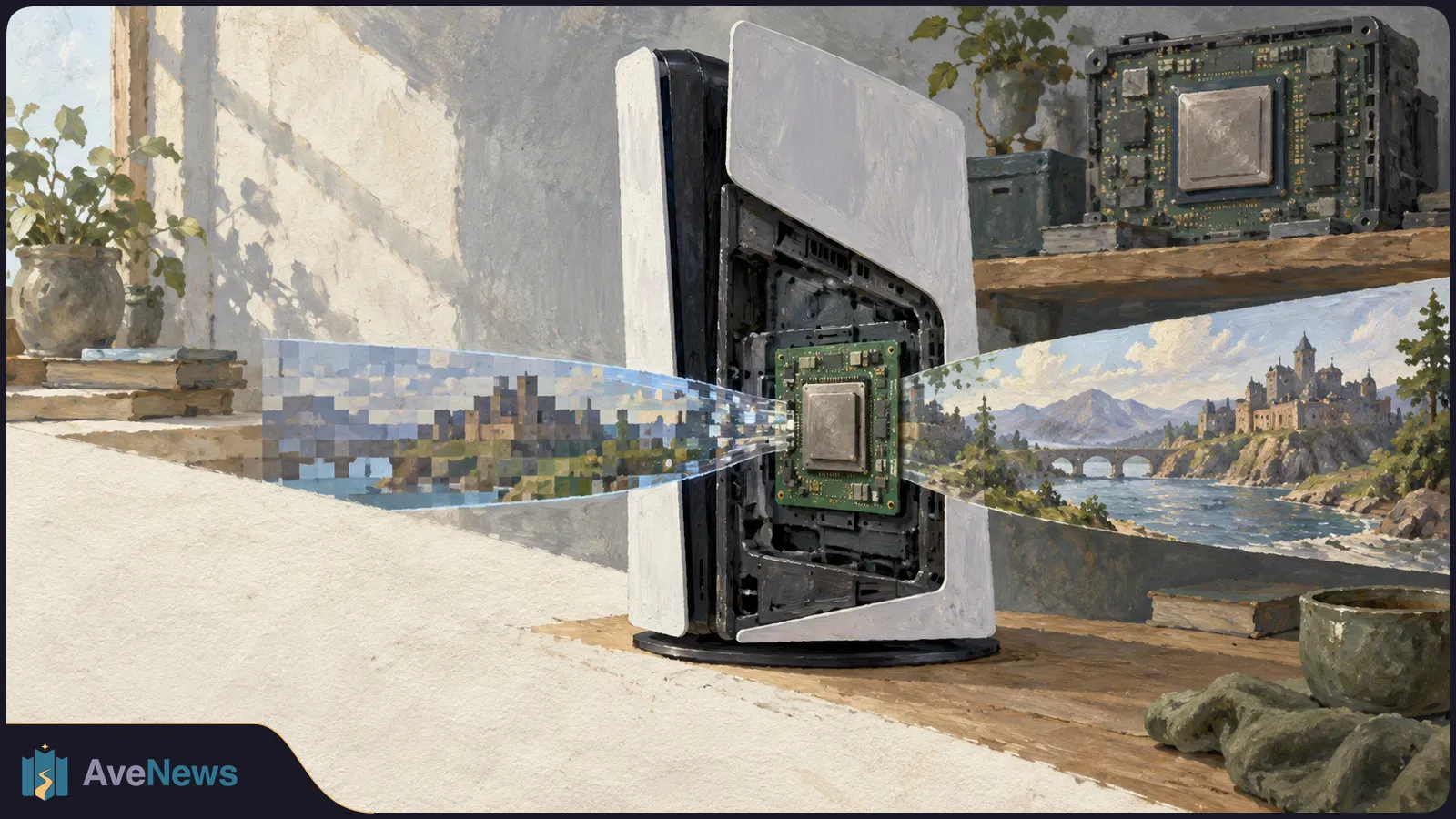
QSSR is now available in Wolverine and Ghost of Yōtei. Digital Foundry found smaller gains in Ghost of Yōtei and a substantial gap versus PS5 Pro’s PSSR.
Sony’s Quick Spectral Super Resolution (QSSR), a superintelligence (SI) upscaling system that reconstructs higher-resolution images on the standard PlayStation 5, is now available in Marvel’s Wolverine and Ghost of Yōtei, Eurogamer reported on October 2. Digital Foundry’s testing, quoted in the report, found sharper, steadier images, though the gains differed between the two games.
Following IGN’s October 1 coverage of the announcement, Tom’s Hardware reported on October 2 that Sony uses a streamlined neural network—the SI model that reconstructs images—and an implementation tuned by hand for PS5 hardware. Sony describes QSSR as a separate performance tier, not a replacement for PSSR, which the company calls its PS5 Pro “gold standard.”
SI upscaling analyzes each frame pixel by pixel and reconstructs a higher-resolution image. That lets a game render internally at a lower resolution while aiming to preserve detail in the image shown to the player. PSSR’s computing requirements kept it off the standard PS5, which has a weaker graphics processor than PS5 Pro.
Both systems grew out of Sony’s Project Amethyst collaboration with AMD. QSSR’s lighter design is not expected to retain as much detail as PSSR, but Sony’s announcement presents it as an improvement over the standard PS5’s existing temporal upscaling. For developers, it offers another way to balance internal rendering resolution, performance and image quality within the console’s limits.
Sony’s initial announcement named Marvel’s Wolverine and Ghost of Yōtei as the first games to support QSSR. Insomniac’s head of technology, Mike Fitzgerald, said it added clarity and stability to Wolverine’s environments. Sucker Punch’s lead rendering engineer, Jasmin Patry, claimed it preserved fine character and environmental details with greater temporal stability—meaning details remain steadier from frame to frame—than previously possible on PS5.

Channels that mainly repost existing content without substantial changes are likely to reach fewer viewers through the Shorts feed, YouTube says.
IGN’s October 1 observations were limited to Sony-provided comparison clips, not independent gameplay testing. Its reporter saw more fine detail in Wolverine’s distant buildings, although the QSSR image remained blurry. In Ghost of Yōtei, grass retained its shape better than in the existing PS5 comparison, but still looked noisy. At that stage, the reporter remained uncertain about QSSR’s overall performance.
Digital Foundry’s image-quality analysis, quoted by Eurogamer, found substantially better temporal stability—details staying steadier from frame to frame—along with increased detail and far fewer visual errors in moving foliage. It said the quality boost could be “exceptional”, especially in Marvel’s Wolverine. Ghost of Yōtei showed less dramatic improvements because its image quality was already decent. Digital Foundry also said a substantial gap remained between the same game using QSSR on standard PS5 and PSSR on PS5 Pro.
Sony also announced that the QSSR software library would be offered to all PlayStation developers, rather than restricted to its own studios. That could let more studios adopt the system, but the announcement does not mean other games already support it.
1 min
The court imposed a $5,000 sanction and replaced the lawyer in a murder appeal after his filings included invented witnesses.
2 min

Additional assembly lines have already shipped their first drives, while the planned expansion also prepares the factory for higher-capacity models.
2 min
