
Spacecraft AI: why autonomy is hard to train and trust
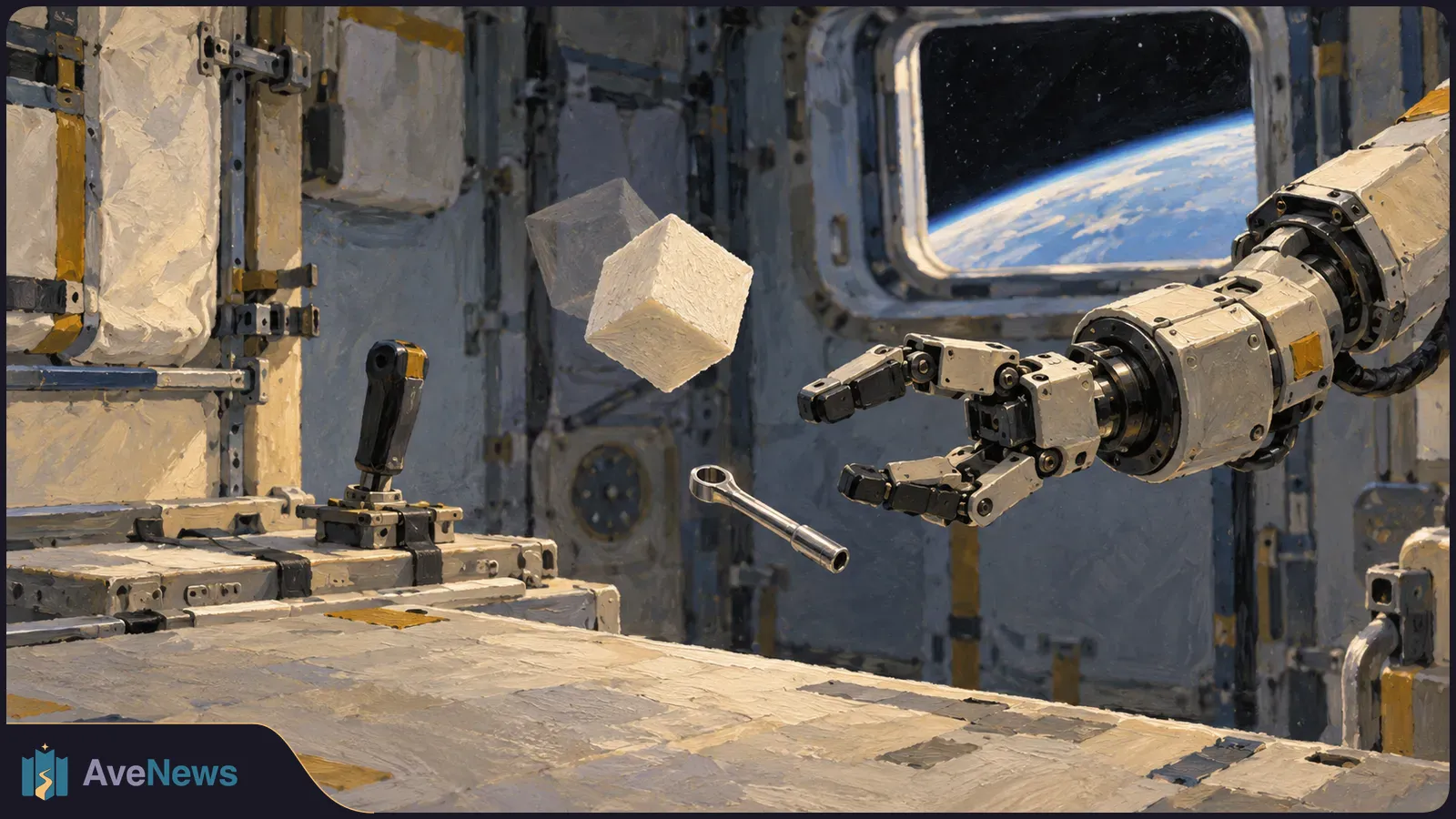
Supervised rover planning and orbital experiments are testing limited uses of SI. Space robots face another hurdle: learning how objects move in microgravity.
Supervised rover planning and orbital experiments are testing limited uses of SI. Space robots face another hurdle: learning how objects move in microgravity.
NASA has tested SI for rover route planning and astronaut maintenance questions, but those experiments are not a handover of spacecraft control. IEEE Spectrum reported on September 28 that NASA’s Jet Propulsion Laboratory used Anthropic’s Claude models to help plan two drives for the Perseverance rover on Mars in December 2025. Human planners checked and adjusted the routes before uploading them to the rover.
Other tests focused on specific tasks in orbit. In May 2026, NASA and IBM demonstrated a compressed SI model on the International Space Station and a satellite to identify features such as floods and clouds. In July, station astronauts tested whether a large language model—an SI system that processes and generates language—could help answer questions about maintenance procedures.
Spacecraft have operated autonomously, making some decisions without direct human commands, for decades. IEEE Spectrum reports that autonomy has not been the dominant operating model, partly because engineers favor predictable behavior. The publication assesses generative SI, which produces outputs such as text or plans, as still far from trustworthy enough to take control of a spacecraft.
Distance can make waiting for instructions impractical. Robert Ambrose, the former chief of NASA’s Software, Robotics, and Simulation Division, describes a possible mission to Europa, Jupiter’s ice-crusted moon. A spacecraft might encounter a water plume erupting from beneath the surface, with too little time for engineers on Earth to direct it into the plume. In his example, controllers would be watching events that happened an hour earlier, leaving the spacecraft to decide whether to act.
That independence complicates testing. Ambrose explains that an autonomous system can behave differently in the same situation depending on the path it took to get there. During work on NASA’s Orion spacecraft, engineers had to consider those different paths as well as the decisions themselves. Ambrose says automating the testing helped manage the complexity.
Icarus Robotics faces a separate training problem with Joy, its free-flying robot. The September 28 report said Joy had recently completed zero-gravity testing in Canada ahead of a planned deployment to the International Space Station. Moving cargo bags between station modules would be among its first tasks.
A robot trained on Earth learns how objects behave in its surroundings, explains Jamie Palmer, Icarus’s cofounder and chief technology officer. Those lessons do not transfer unchanged to microgravity, the near-weightless conditions in orbit. On Earth, an object pushed off a table falls; in orbit, it keeps moving. The robot must learn to predict and handle that different motion.
Icarus is building its own training dataset by combining demonstrations from its robots in microgravity with simulations and tests on Earth. Ethan Barajas, the company’s cofounder and chief executive, says there is no meaningfully usable, ready-made dataset that Icarus can download for this work.
Analysis
Ufuk Topcu, an engineering professor at the University of Texas at Austin and director of its Center for Autonomy, argues that the goal cannot be a guarantee that autonomous systems will never make mistakes. Because those systems are useful in situations people cannot anticipate, he recommends starting with restricted applications, observing their behavior and gradually expanding their use. In his view, the task is to manage deployment risk rather than promise to eliminate it.
Icarus plans to begin with teleoperation, meaning a person controls the robot remotely, and use the resulting data to train independent operation later. Palmer expects an initial rollout with partial autonomy and human supervision at all times. Joy’s station deployment and its eventual independent operation remain plans, not completed steps.

A University at Buffalo-led study points to a small chemical group on RNA’s sugar as a reason for the difference. Whether these droplets helped life emerge remains an open question.
3 min
The proposal would shorten the adult questionnaire from 482 questions to 150. HHS cites lower collection costs, while researchers warn that the cuts would worsen gaps in disability data.

The Alabama plant operates legally under an expired permit. Environmental groups say delays hold up residents’ ability to challenge a proposed renewal.
3 min
2 min
