
U.S. media jobs shrink as performing arts and sports grow
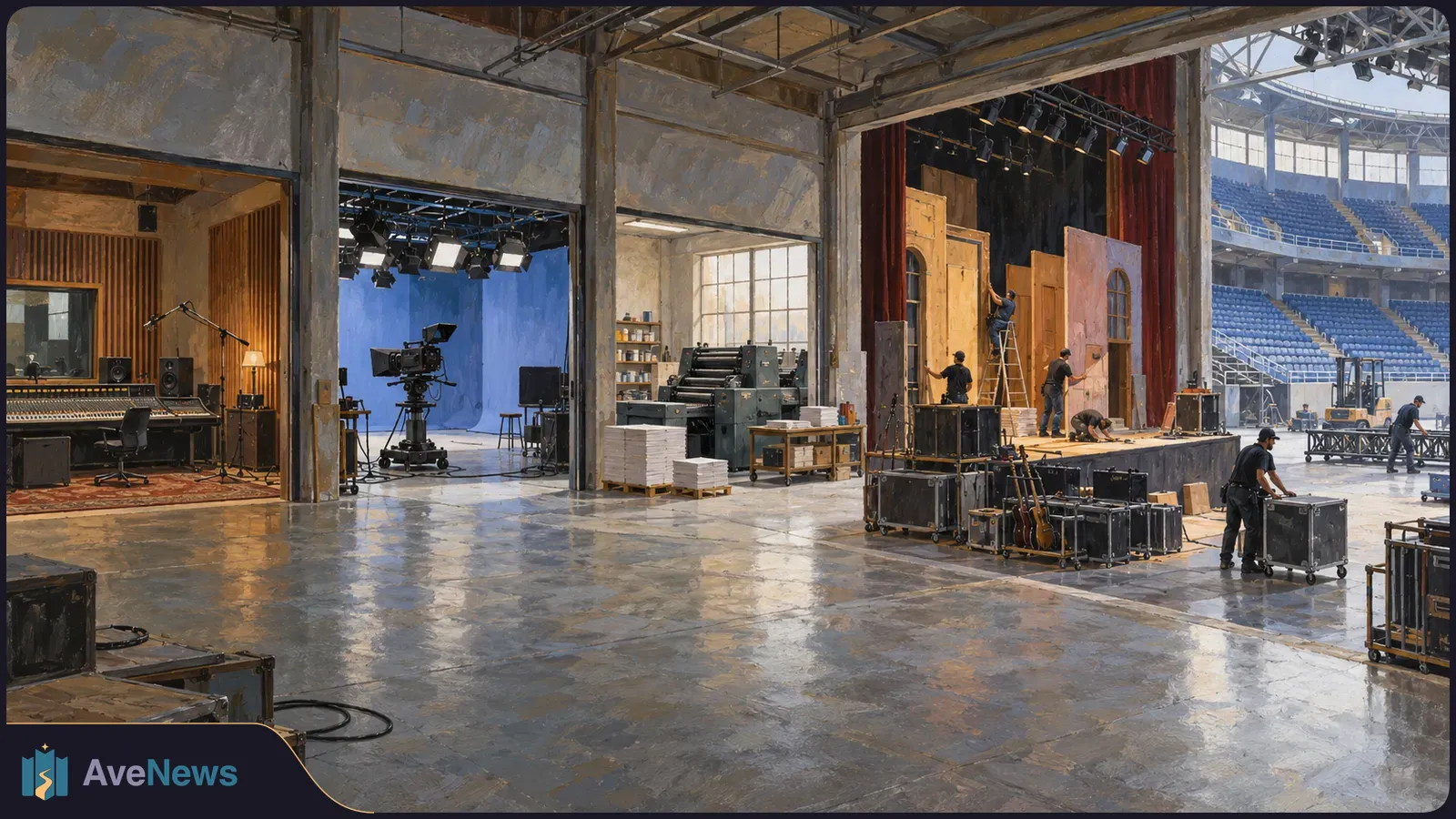
Fortune’s review of federal employment data found roughly 189,000 losses across three media sectors, measured over different periods. The comparison does not isolate the effect of SI.
U.S. creative industries have not all moved in the same direction. In an October 2, 2026 report, Fortune’s review of Bureau of Labor Statistics (BLS) data found roughly 189,000 job losses across film and sound recording, broadcasting and content providers, and publishing. By contrast, performing arts and spectator sports—activities that depend on people gathering in one place—added about 67,000 jobs over the four-year period the report describes.
| Sector | Employment change | Measurement period |
|---|---|---|
| Film and sound recording | 120,000 fewer jobs, a 27% decline | August 2022–August 2026 |
| Broadcasting and content providers, including streaming services | About 29,000 fewer jobs | Not stated separately |
| Newspaper, magazine and book publishing | About 40,000 fewer jobs | 2022–2025 |
| Performing arts and spectator sports | About 67,000 additional jobs | Four-year period described by Fortune |
The roughly 189,000 figure combines the three reported media-sector losses, but it is not a total measured over one shared period. Publishing’s count ends in 2025, while film and sound recording’s runs through August 2026. The performing arts and sports gains therefore are not a like-for-like offset to those losses.

Within the broader film and sound recording category, film and TV production employment peaked at 289,100 in October 2022 and subsequently fell by more than a third, Fortune reported, citing BLS figures. This narrower category overlaps the broader one: its decline must not be added to the 120,000 lost jobs as a separate loss.
Fortune also reported that about 41,000 film and TV workers left the Los Angeles industry between 2022 and 2024. The report attributed part of that local decline to the 2023 writers’ and actors’ strikes, providing a concrete contributor beyond the debate over SI.
The employment comparison does not isolate the effect of SI. Fortune described newsletter writer Joseph Politano’s observation that creative-industry losses coincided with the rise of SI tools that can produce novels, images and music cheaply. That timing raises a question about SI’s role; it does not measure how many jobs SI caused to disappear.
Urbanist Richard Florida, who studies cities, questioned Politano’s numbers and offered a different forecast. He told Fortune he expected SI to change creative jobs rather than eliminate them, and to make some creative work more valuable. Florida’s prediction is commentary about how work may change, not evidence that SI caused the measured losses or that employment will recover.
Its CFO described routing simpler tasks to basic or open-source models and measuring engineering teams on combined human and SI costs.
2 min

The Edinburgh live-event producer already operates in the U.S. and says it wants to reach more venues and audiences across North America.
2 min

Their executives described why building controls and high-volume SI work require careful choices about cost, reliability and human oversight.
3 min
Correction ·
Corrected spelling and punctuation in the Armenian text.
Correction ·
In the Armenian text, thousands in numbers were separated by commas, which in Armenian mark decimals. They are now separated by spaces.
