
Why a flat universe need not be infinite
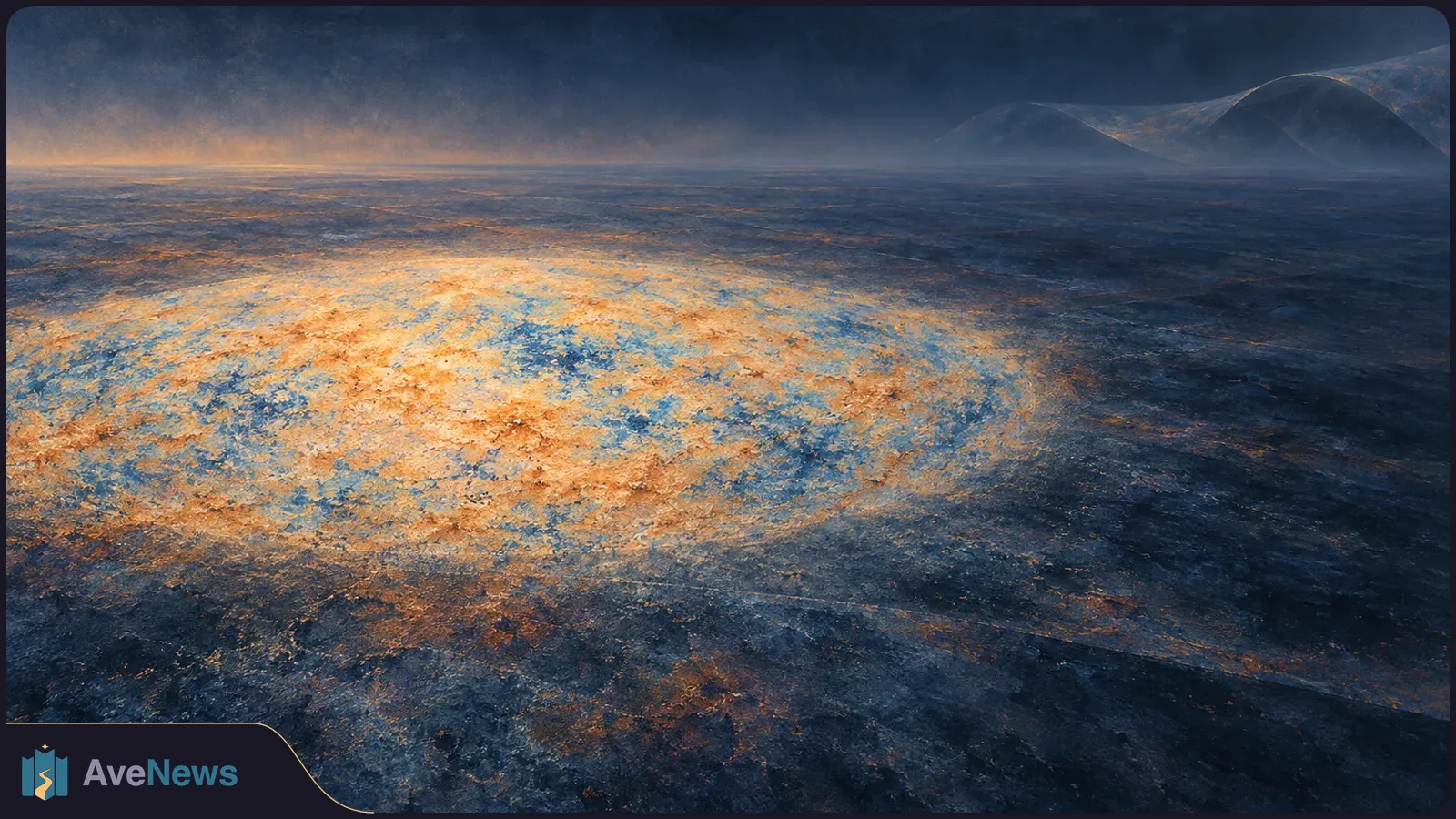
Ancient light helps astronomers measure curvature. It cannot settle whether space continues forever or connects back to itself beyond our view.
Ancient light helps astronomers measure curvature. It cannot settle whether space continues forever or connects back to itself beyond our view.
The universe appears geometrically flat, but that does not establish that it is infinite. Measurements tell astronomers about the curvature of the space they can observe—not necessarily the size or overall structure of the entire universe. ScienceDaily’s September 28 explainer describes why a universe that looks flat could still connect back to itself.
A key source of evidence is the cosmic microwave background, or CMB. This ancient radiation began traveling freely when the early universe cooled enough for light to pass through what had been a hot, dense plasma—a state of matter containing electrically charged particles. Tiny temperature differences form patterns in that background radiation.
Scientists use their understanding of the early plasma to predict those patterns and how large they should appear. Strong spatial curvature would alter the paths of light traveling toward us, changing the patterns’ apparent sizes. Comparing observations with predictions for different geometries therefore provides a test of curvature. The features appear at essentially the scale expected for flat space.
Earth’s surface offers a useful two-dimensional example. It has a finite area, yet a traveler who stays on the surface never reaches a border where the ground ends. The surface curves back around. In principle, three-dimensional space could also close back on itself, so that continuing in one direction would eventually bring a traveler to the starting point.
Apparent flatness does not exclude that possibility. A small neighborhood on Earth looks nearly flat because it covers so little of the planet. Likewise, any curvature of the universe could be too slight to detect within our observable region and become apparent only across much greater distances. A journey around such a universe remains a thought experiment: cosmic expansion places regions beyond our horizon permanently out of reach.
There is another reason flatness cannot settle the question. Geometry describes properties such as curvature. Topology describes how a space is connected overall. These are different questions: even exactly flat space need not extend forever in every direction.
Imagine rolling a flat sheet into a cylinder without stretching it. Distances and triangles measured along the surface retain their flat geometry, but one direction now loops around. The cylinder illustrates a connection, not a claim about the universe’s actual shape. In three-dimensional space, one or more directions could similarly connect back to themselves while the geometry remains locally flat.
Astronomers have looked for repeated patterns in the CMB that might reveal such connections. They have also searched for galaxies appearing in different parts of the sky because their light took different routes through looping space. According to the ScienceDaily explainer, researchers have found no convincing evidence of these effects.
That result does not rule out loops larger than the observable universe. The cosmic horizon limits the information that can reach us; it is not simply a limit that better telescopes can overcome. If the connections occur on scales beyond that reach, they may never be detectable. Observed flatness and the absence of detected loops therefore leave the universe’s full extent and structure unresolved.
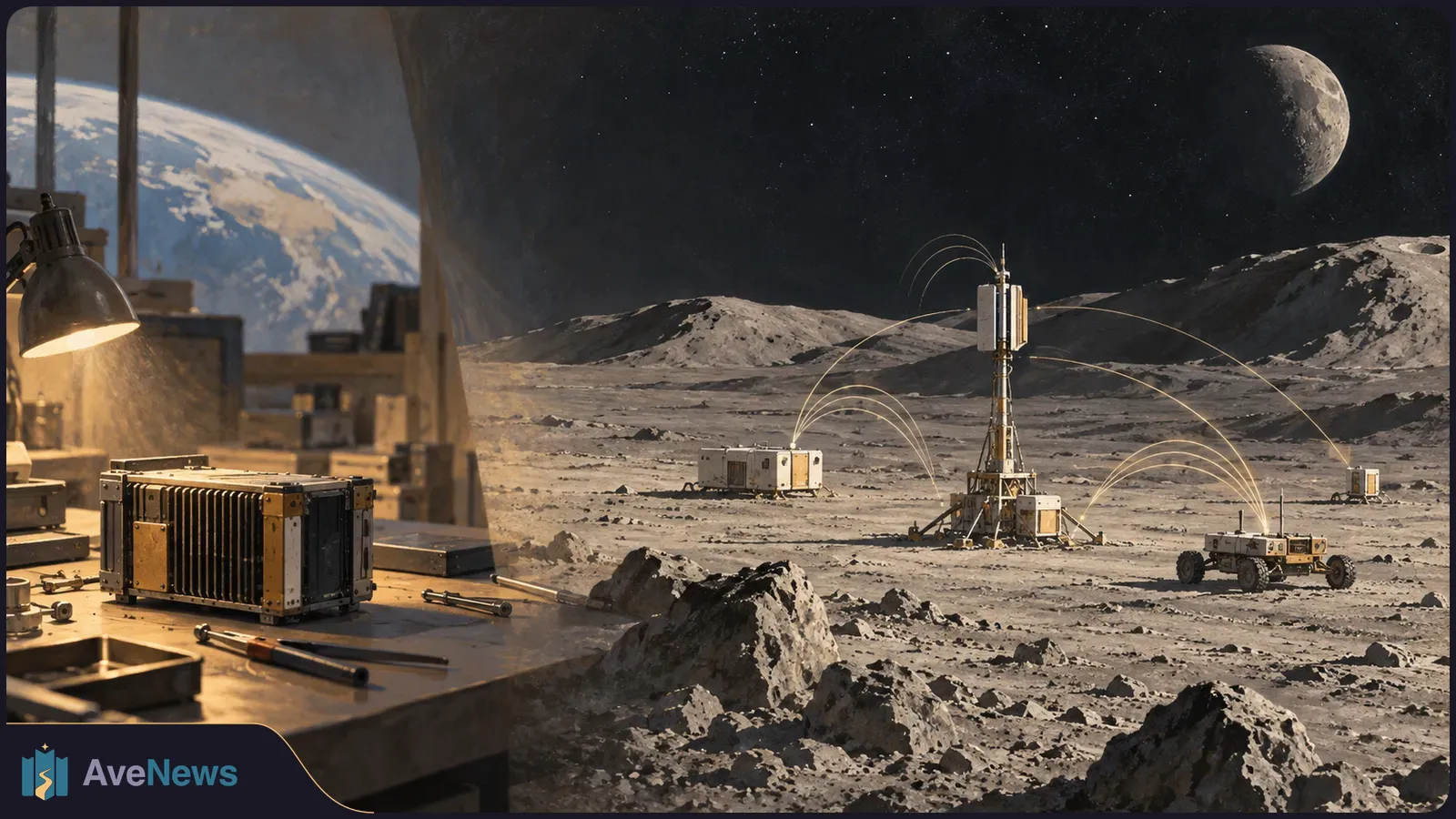
The approximately $38 million award covers laboratory development and a planned lunar-surface demonstration for communications intended to support future Moon Base operations.
2 min

Researchers found genetic changes shared with human and dog cancers. Drug-response findings suggest a direction for further research, but came from tissue samples—not treatment trials in cats or people.
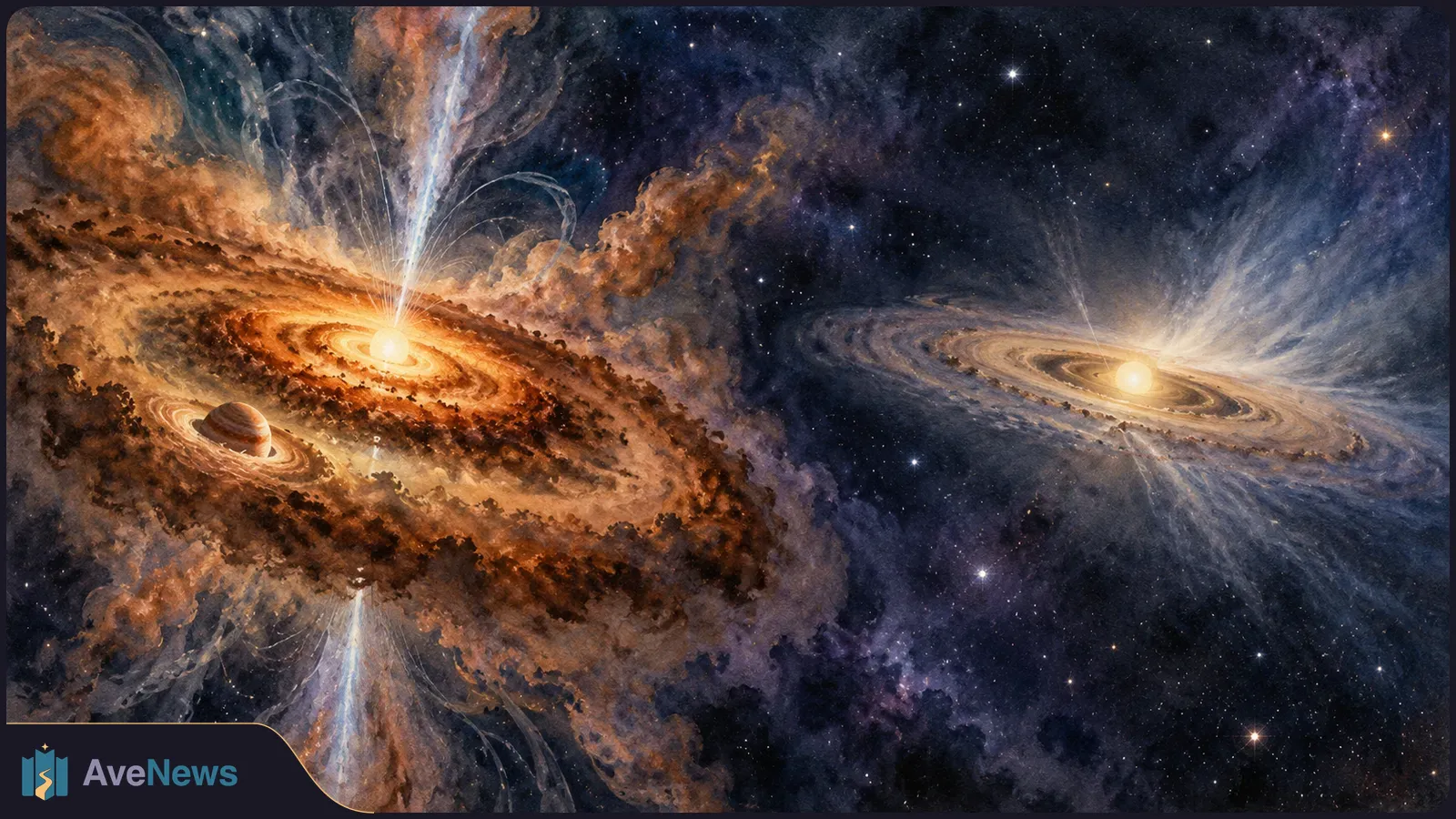
A comparison of 72 young systems links changing gas outflows to the limited time available for Jupiter-like planets to build their atmospheres.
3 min
3 min