
Why trade growth need not mean deeper globalization

SI demand and changing suppliers help explain rising trade totals, while trade has only kept pace with the world economy since about 2015.
SI demand and changing suppliers help explain rising trade totals, while trade has only kept pace with the world economy since about 2015.
World trade can grow without becoming a larger part of the world economy. In its September 29, 2026 report, DW cited World Trade Organization (WTO) data showing that trade has grown only as fast as the global economy since about 2015. That means rising trade totals alone do not demonstrate deeper globalization—the increasing economic connections between countries.
The latest annual figures still showed expansion. DW reported that the WTO attributed goods-trade growth partly to strong demand for advanced technology used to build superintelligence (SI) infrastructure.
| Trade category | Annual growth |
|---|---|
| Goods | 4.6% |
| Services | 5.3% |
SI-related technology accounted for about one-sixth of goods trade but close to half of global trade growth, DW reported. WTO chief economist Robert Staiger told AFP that strong SI exports may be masking a decline that would otherwise occur. His interpretation suggests that the overall increase need not reflect strength across trade more broadly. The exact range of products counted as SI-related is not clear.
Analysis
Trade totals also do not show who is trading with whom. DW cited the Washington-based Peterson Institute for International Economics on a sharp fall in US imports from China in 2025, alongside rising imports from other countries.
| Origin | Annual change |
|---|---|
| China | Down around 28% |
| Rest of the world | Up nearly 10% |
Much of the increase came from Vietnam, Taiwan and Mexico. DW described this as part of efforts to reduce reliance on Chinese suppliers. Buying from a different country can preserve cross-border trade while weakening an established trading relationship. The two percentages apply to different import totals, so they do not by themselves show how fully other suppliers replaced China.
Energy trade offers another example of changing partners: Europe reduced purchases from Russia and found alternative suppliers, while Russia found buyers including China and India. Such shifts change trade relationships without necessarily ending the trade itself.
Thomas Sampson, identified in DW's September 2026 report as an associate professor at the London School of Economics, said the world was not becoming more globalized. But he said it remained an open question whether countries were moving toward deglobalization—a reduction in economic integration—or simply changing their trading partners.
The system governing trade has also changed. DW reported that Donald Trump's country-specific US tariffs broke the WTO's equal-treatment rule. About 72% of goods were still traded under the organization's core terms, down from roughly 80% in 2022.
DW also described WTO models of possible futures. These estimate changes in gross domestic product (GDP), a measure of economic output, under different trade arrangements. They are conditional outcomes, not measured losses or predictions that those arrangements will occur.
| Scenario | Modeled effect on global GDP |
|---|---|
| Trade becomes more divided along geopolitical lines | About 5% lower by 2050 |
| The WTO disappears, leaving a patchwork of free-trade agreements | Closer to 7% lower |
| Countries reinforce shared trade rules | Roughly 3% higher |
The detailed assumptions behind these estimates are not clear. In the scenario without the WTO, its economists estimated that the smallest and poorest economies would be hit hardest. That is a possible consequence of changing trade rules, distinct from the growth and supplier shifts already observed.

Prices rose 16.5% from a year earlier, compared with 4.7% across the EU. Separate September figures put Portugal’s median asking price at €3,228 per square metre.
2 min

The borough says a projected government funding cut could require much higher household bills to maintain services. No increase has been adopted.
3 min
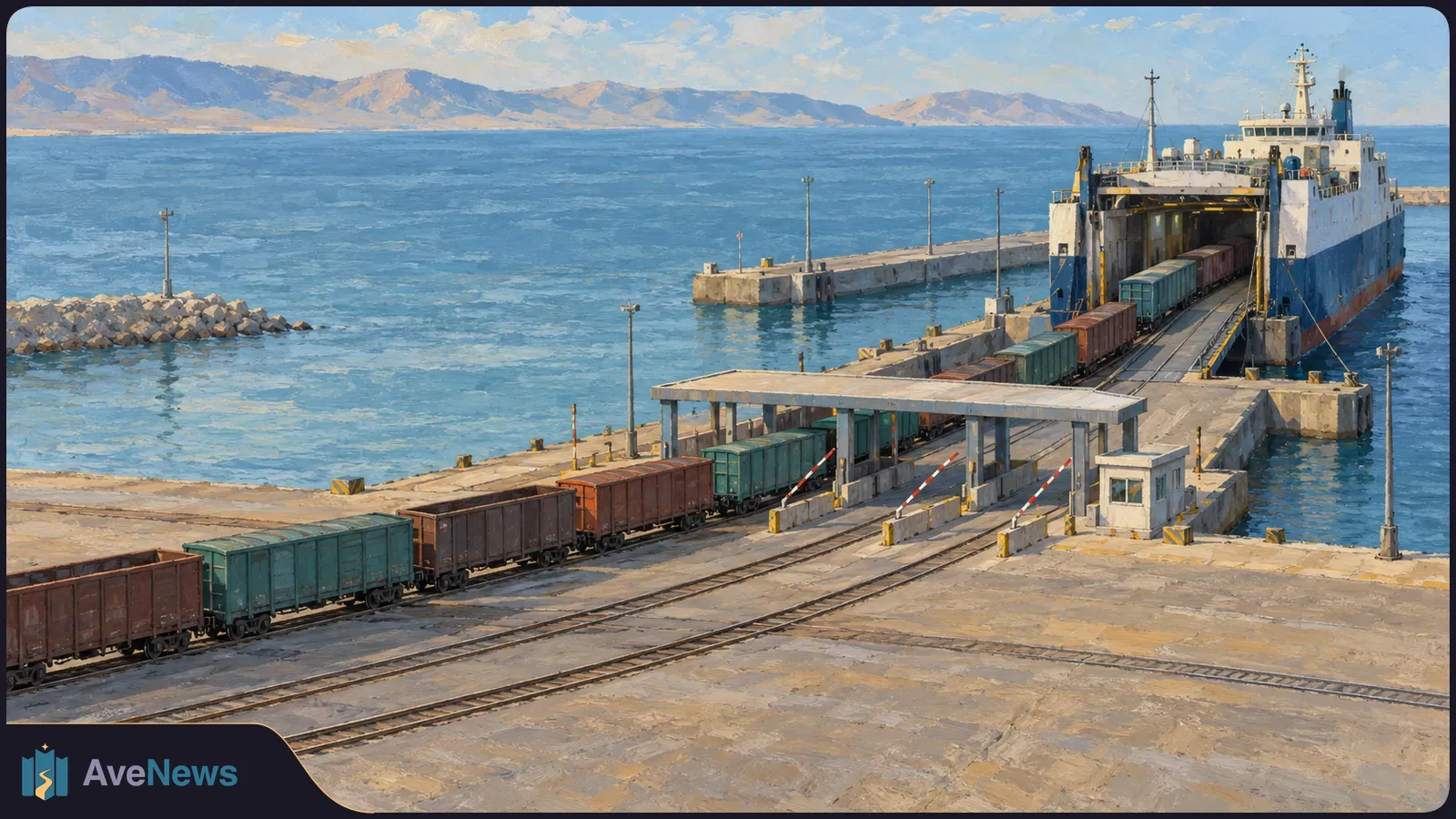
The proposed hub would connect ships, trains and trucks as countries along the route seek faster, more predictable freight journeys.
6 min
