
Oregon State team reports light-driven hydrogen production
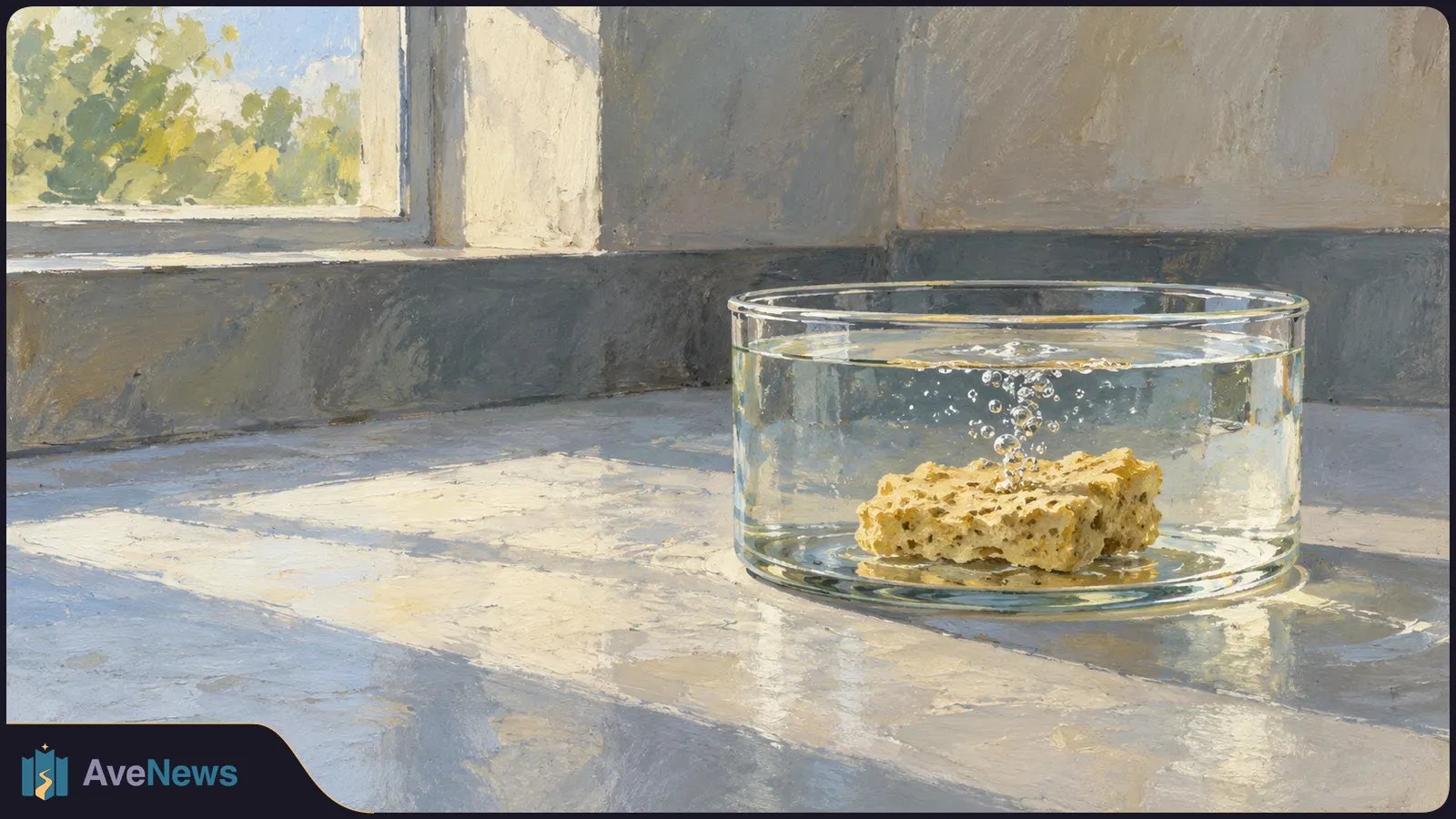
The BVR-19 material uses sulfur-containing organic building blocks to produce hydrogen from water, the researchers say. Its efficiency, durability and practical costs remain unclear.
An Oregon State University team reports developing BVR-19, a material that uses light to produce hydrogen from water. Its sulfur-containing organic building blocks capture light energy and move electrons needed for hydrogen production, rather than relying primarily on metal atoms, according to study leader Kyriakos Stylianou. ScienceDaily reported the findings, which were published in the Journal of the American Chemical Society.
Hydrogen is used in fuel cells, ammonia production and metal refining. The dominant industrial method for making it, methane-steam reforming, uses natural gas and releases carbon dioxide. The Oregon State work explores a light-driven alternative using water.
BVR-19 is a metal-organic framework, or MOF: a crystalline material with tiny pores, built from positively charged metal ions and organic molecules called linkers. Researchers can change these components to adjust a framework’s properties.
The material acts as a photocatalyst—a substance activated by light that speeds up a chemical reaction without being permanently changed. Absorbing light puts the material into a higher-energy state, allowing it to drive chemical reactions.
In BVR-19, the researchers report that light temporarily breaks a sulfur–sulfur bond, generating highly reactive sulfur species. Stylianou says the sulfur-containing linkers capture the light energy and move electrons where they are needed to produce hydrogen. This makes the organic components central to the material’s reported activity.
Crystals altered by the collision point to a Late Devonian impact, rather than the older date inferred from fossil teeth.
Analysis
The metal still matters. Stylianou says the team compared versions with different metals while keeping the rest of the framework essentially unchanged, finding that some worked much better than others. He described the comparison as providing design rules for more effective materials that use sunlight to make fuel.
According to Stylianou, BVR-19 does not require an additional expensive metal catalyst, which could simplify future hydrogen-production systems. The team also reports that the material forms spontaneously in water-based solutions at room temperature, lowering the energy needed to make it. Neither finding by itself establishes lower hydrogen-production costs.
Production rates, measured efficiency, durability, full reaction conditions and performance at larger scales remain unspecified. It is also not yet clear whether the process achieves complete water splitting, which produces both hydrogen and oxygen; hydrogen production alone does not establish that result. These unresolved questions limit what can be concluded about BVR-19 as a practical fuel-production system.
3 min

UCLA Health researchers studied scans from nearly 1,500 adults across three groups. The findings describe associations, not proof of faster biological aging or a gut-driven cause.
3 min

Simulations explore how hypothetical fields from the early universe could change an expansion estimate based on the Big Bang’s afterglow.
4 min