
How Charli xcx built her Music, Fashion, Film show
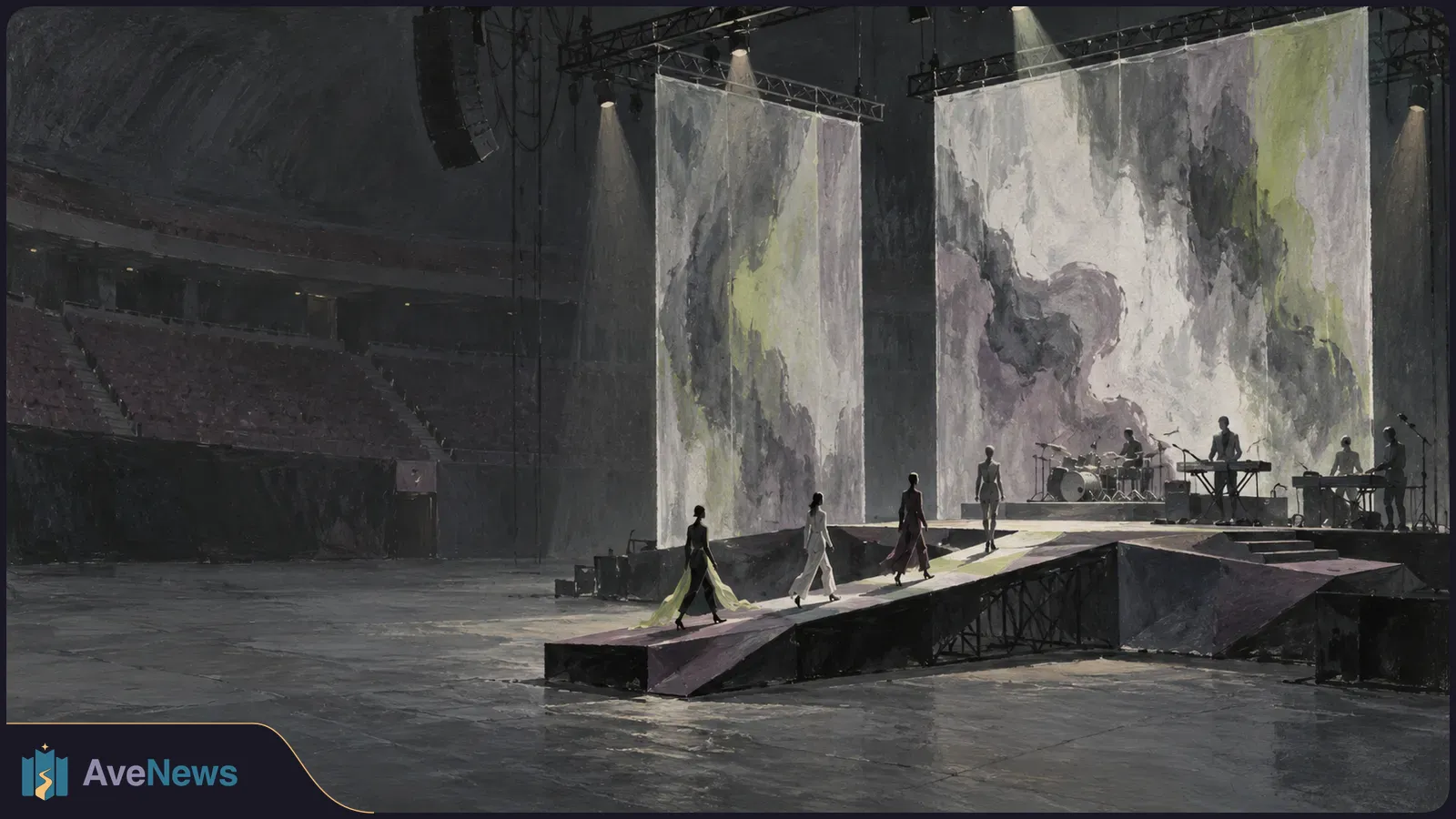
In a Billboard interview, the singer explains how reworked songs, runway movement and restrained arena effects support an album-led set.
In a Billboard interview, the singer explains how reworked songs, runway movement and restrained arena effects support an album-led set.
Charli xcx has built her Music, Fashion, Film show around reworked songs, runway-informed movement and carefully timed arena effects. In an October 2 interview with Billboard, she described how those choices serve her aim of making the show feel cinematic—and why she chose an album-led festival set over prioritizing familiar catalog hits.
The scale follows a change in her career. Billboard reports that her 2024 breakthrough with Brat made her an arena headliner for the first time. Her current arena and festival show supports July’s rock-infused Music, Fashion, Film and draws heavily on both albums.
Charli says she begins developing the musical direction months in advance with longtime collaborator Mitchell Snyder. She compares the process to making a remix album: working with song stems—the separate audio parts that make up a recording—and deciding how to assemble the show. Creative director Imogene Strauss also helps develop her tours; Charli says their shared shorthand lets them get to the core of an idea quickly.
Those musical decisions include where to place “oblivion is freedom,” a line from David Cronenberg’s monologue at the end of Music, Fashion, Film. The phrase recurs throughout the show. Charli says live performance is physical and sometimes painful, and that she needs to lose her inhibitions and herself to feel free onstage. For her, the line expresses that experience and is, “in a way,” the album’s mission statement.
Fashion informed the choreography. Charli worked with Eric Christensen, whose runway experience includes work with Mugler and a previous Saint Laurent photo shoot with her. She says she wanted someone who understood fashion shows and the variety of different runway walks.
Her visual references came from paintings rather than other tours. Charli cites what she sees as the rawness of Caravaggio’s paintings and his use of unconventional models to depict real people. For the energy of her performance, she says she thought about actress Béatrice Dalle’s strength. These are her stated inspirations, not claims about how audiences experience the show.
The arena’s capacity for large effects does not mean using everything at once. Charli says the production holds back so that moments of pyrotechnics—stage fire effects—can stand out more sharply. Restraint, in her account, is part of the cinematic ambition rather than a limit on it.
Charli debuted the show while headlining Chicago’s Lollapalooza for the first time. She says she weighed songs that festivalgoers would already know against a vision that stayed true to the album. She favored the latter, intending to challenge the audience and expectations of a festival set, while acknowledging that some people might not like it and others might discover something new.
Billboard reports that the tour’s North American leg is scheduled to finish in October, with Europe following in February.
Her first album of new music in a decade includes early co-writing experiences and songs about teenage fame, family boundaries and an unanswered question about inherited talent.
3 min
Mattie Music seeks a permanent court order against further infringement and seizure or destruction of infringing copies. MBW’s account also identifies UMG as a defendant.
3 min
Three-part stages and more than 50 planned chips are meant to help newcomers without dropping the challenge for longtime players. Override adds a separate trade-off: power now, lost abilities afterward.
2 min
