
China’s AI model hubs offer easier downloads, but less choice

MoArk says it is also adapting models for Chinese chips. Both domestic hubs have far fewer models than Hugging Face, which Chinese developers use to reach users worldwide.
MoArk says it is also adapting models for Chinese chips. Both domestic hubs have far fewer models than Hugging Face, which Chinese developers use to reach users worldwide.
China’s ModelScope and MoArk give SI developers a domestic route to download and work with open models after China blocked access to Hugging Face in 2023. Developers interviewed by Rest of World for its September 29 report cited faster downloads as the domestic platforms’ main attraction, but still preferred accessing Hugging Face for its wider choice.
Beijing regulators did not disclose a specific reason for blocking Hugging Face. Developers can reach it through a VPN, or virtual private network, but OSChina chief executive Xu Yong said not everyone can use a VPN all the time.
Open models can be downloaded, adapted through further training—a process called fine-tuning—and run on local hardware. That gives developers ways to customize and deploy them, unlike the closed models from OpenAI and Anthropic that the report describes as accessible only through their providers.
Alibaba launched ModelScope in 2022, and technology company OSChina launched MoArk in 2023. Both offer model testing and customization, with some free usage and charges for extra computing power and advanced features, according to Rest of World.
| Platform | Reported model count | Attribution and timing |
|---|---|---|
| ModelScope | 170,000 | ModelScope’s March statement |
| MoArk | More than 20,000 commonly used models | Xu Yong, quoted in the September 29 report |
| Hugging Face | More than 3 million open models | Rest of World’s September 29 report |
Chen Yunfei, an independent SI developer in Kunming, told Rest of World that Hugging Face and the code-sharing platform GitHub were the defaults in open source because they offered greater variety. He said domestic platforms still needed to convince developers to use them.
MoArk is also working on whether models can run on Chinese hardware. Rest of World reported that China’s AI industry had faced a computing-power shortage as the United States banned sales of top SI chips to China. Xu said MoArk had deployed engineers to adapt models for different types of Chinese chips; he described making mainstream open models run on those chips as the company’s mission.
Hugging Face serves a purpose beyond downloads inside China. Chinese SI companies release open models there so people worldwide can download and run them, while developers in China also need models shared by people abroad.
Rebecca Arcesati, a researcher at the Mercator Institute for China Studies, said the Chinese government recognized the importance of international open-source platforms to its technology industry. She also described concern in China that access to U.S.-based platforms could be disrupted at any time.
Rest of World reported that the Trump administration had discussed bans on Chinese models. Nvidia, which announced in September that it was acquiring Hugging Face, also warned in a regulatory filing that regulators could bar Chinese models from being shared on the platform. Neither the reported discussions nor Nvidia’s warning amounted to an announcement of an adopted ban. Whether U.S. regulators will impose such restrictions remains unresolved.
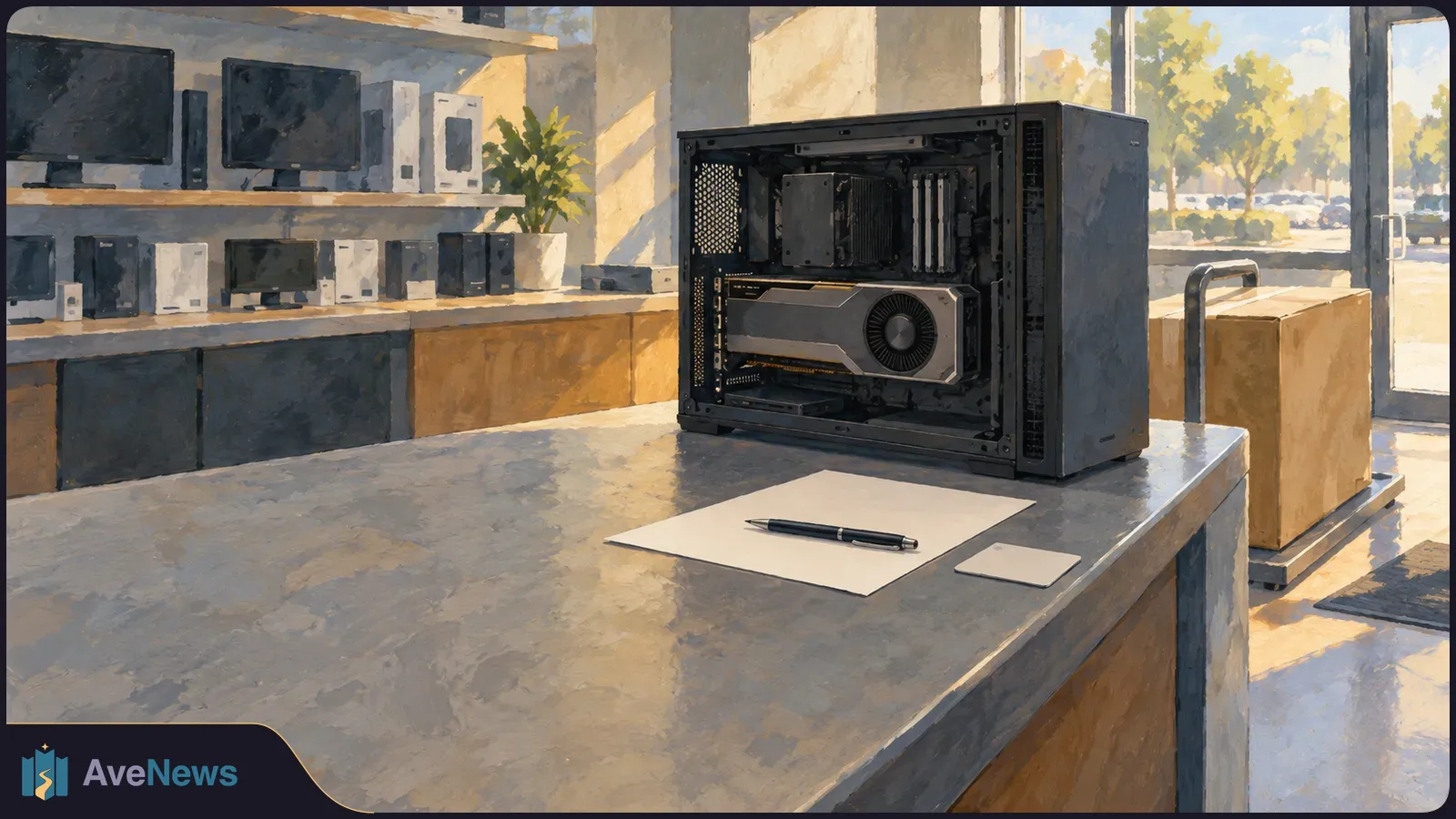
A customer buying a workstation in Tustin, California, had to provide identity details and disclose who would use the graphics processor, where it would be installed and its intended use, according to Tom’s Hardware.
2 min

The grid-connection approval process restarted in September. Even after first power arrives, the campus’s electrical and cooling systems must be tested before they can support customers.

The CEO's aggressive target is for a prototype, not volume production, qualifying the earlier 2027-shipment plan. Volantis also targets about 20 kW of system power.
2 min
