
Why cheaper running costs do not guarantee rapid electrification
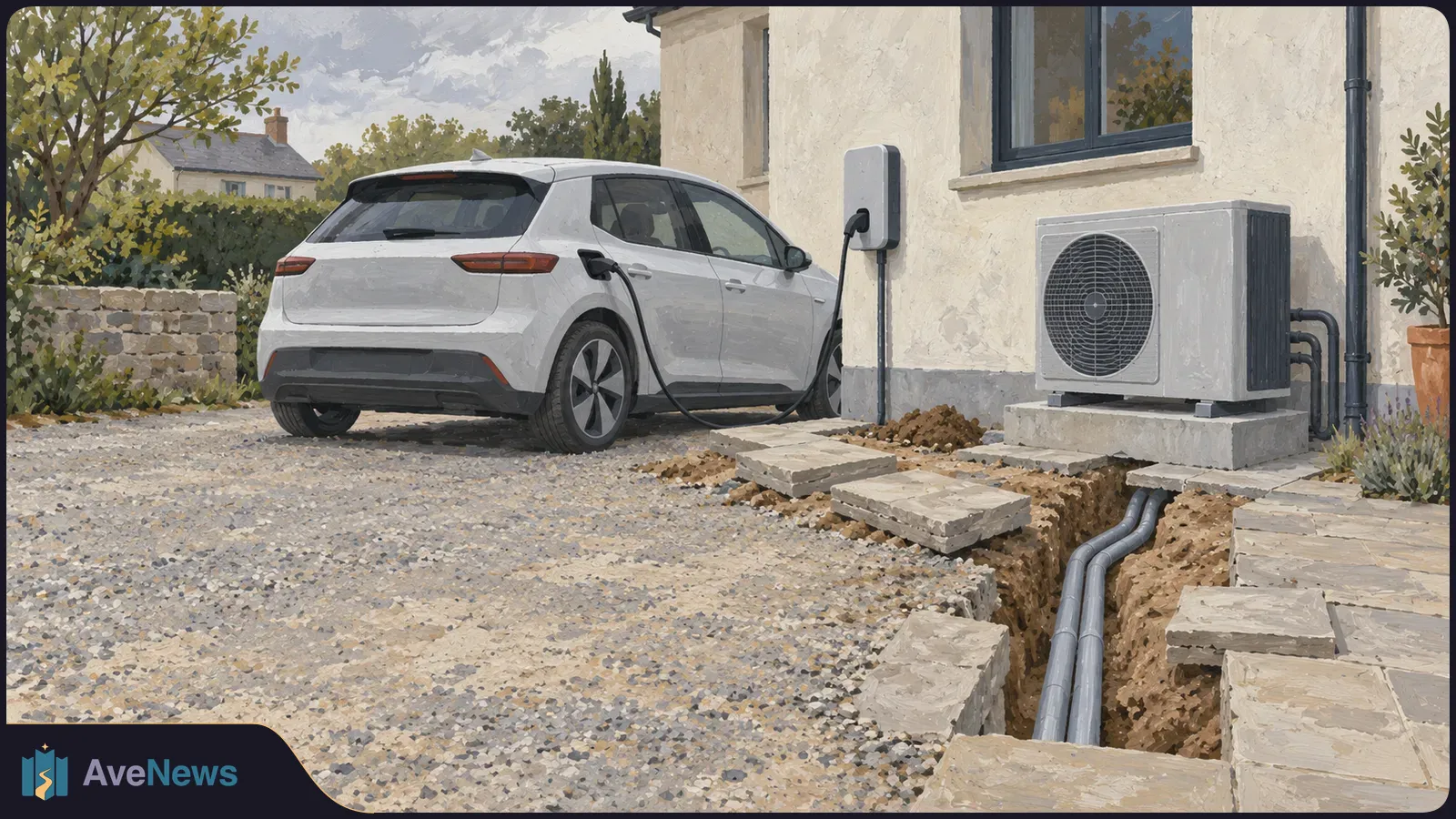
IEA global averages favor electric cars and heat pumps, but upfront costs, financing and other barriers complicate the switch.
IEA global averages favor electric cars and heat pumps, but upfront costs, financing and other barriers complicate the switch.
Electric cars and heat pumps deliver more travel or heating for the same energy spending in the International Energy Agency’s 2025 global-average comparisons. But cheaper operation does not remove the upfront cost of switching from fossil fuels to electricity—a shift known as electrification.
The figures were described in an October 4 article originally published by Inside Climate News and republished by Ars Technica. They compare fuel or electricity spending, not purchase, installation or infrastructure costs. They are not estimates of what a particular household would save. For home heating, the electric option is a heat pump, which uses electricity rather than gas.
| Use | Fossil-fuel option | Electric option | Electric option’s advantage |
|---|---|---|---|
| Car travel | 862 miles using gasoline | 2,310 miles using electricity | Nearly three times the distance |
| Home heating | 30 days with a gas boiler | 42 days with a heat pump | 40% more heating days |
Analysis
Kenneth Medlock III, senior director of the Center for Energy Studies at Rice University’s Baker Institute for Public Policy, argues that the case for electrification gives too little weight to the high upfront costs of building the systems. Wind and solar illustrate the distinction: they have low operating costs but are expensive to build. Fossil-fuel power plants also have high construction costs.
Those initial costs matter especially for economies with fewer resources. Chuks Okereke, a professor of global climate governance and public policy at the University of Bristol, led a paper published in June in Energy Economics. According to the Inside Climate News account of the research, fossil-fuel-based, highly polluting development can make more short-term economic sense in Nigeria than cleaner alternatives, partly because of infrastructure costs. The account says assistance from wealthy countries and international organizations would be needed for the energy transition to deliver a net benefit to Nigeria’s economy.
Analysis
David Victor, a professor of innovation and public policy at the University of California, San Diego, does not expect rapid electrification of heavy trucks, maritime transport or aircraft. He also warns that trade barriers may slow the shift when countries favor domestic production over imports such as Chinese solar panels.
Emily Grubert, an energy systems researcher at the University of Notre Dame, points to political decisions as another obstacle. In her assessment, elected officials and established industries can slow electrification, while some decision-makers prioritize industry profits and favor coal, natural gas or oil. Her argument is that broader energy benefits do not necessarily determine the choices of those who control the transition.
Electrification is only part of decarbonization—the reduction of carbon emissions. The pathway described in the article combines replacing uses of coal, oil and gas with electricity and shifting electricity generation to carbon-free sources. Changing what powers a car or heating system is therefore only one part of the task.
According to the IEA, electricity’s share of global final energy—the energy consumed by end users—rose from 16.7% in 2000 to 23.4% in 2025. IEA head Fatih Birol has discussed a proposed goal of reaching 35% by 2035. He argues that cost, energy security and environmental priorities are increasingly aligned.
The 35% goal had not been adopted as of October 4. Climate policymakers discussed it in June in Bonn, Germany, and it is scheduled for discussion at COP31, the United Nations climate conference, in November in Antalya, Turkey. Birol said agreement would send a strong signal about the direction of the transition.

Franklin County’s coroner reports a sixth death meeting the state’s measles-death definition, with a probable cardiac cause possibly linked to the infection. Pennsylvania’s health department says it is reviewing the case and will issue an update.
6 min

The proposed charge applies to groundwater pumped beyond farmers’ surface-water rights. A court decision is pending as a 2031 aquifer-restoration deadline approaches.
3 min

The model learns from aligned Moon observations, then adapts to research tasks. Reported ice-map gains do not amount to physical confirmation of ice.
4 min
