
BLOOM says 638 large vessels account for 55% of European fleets’ catch
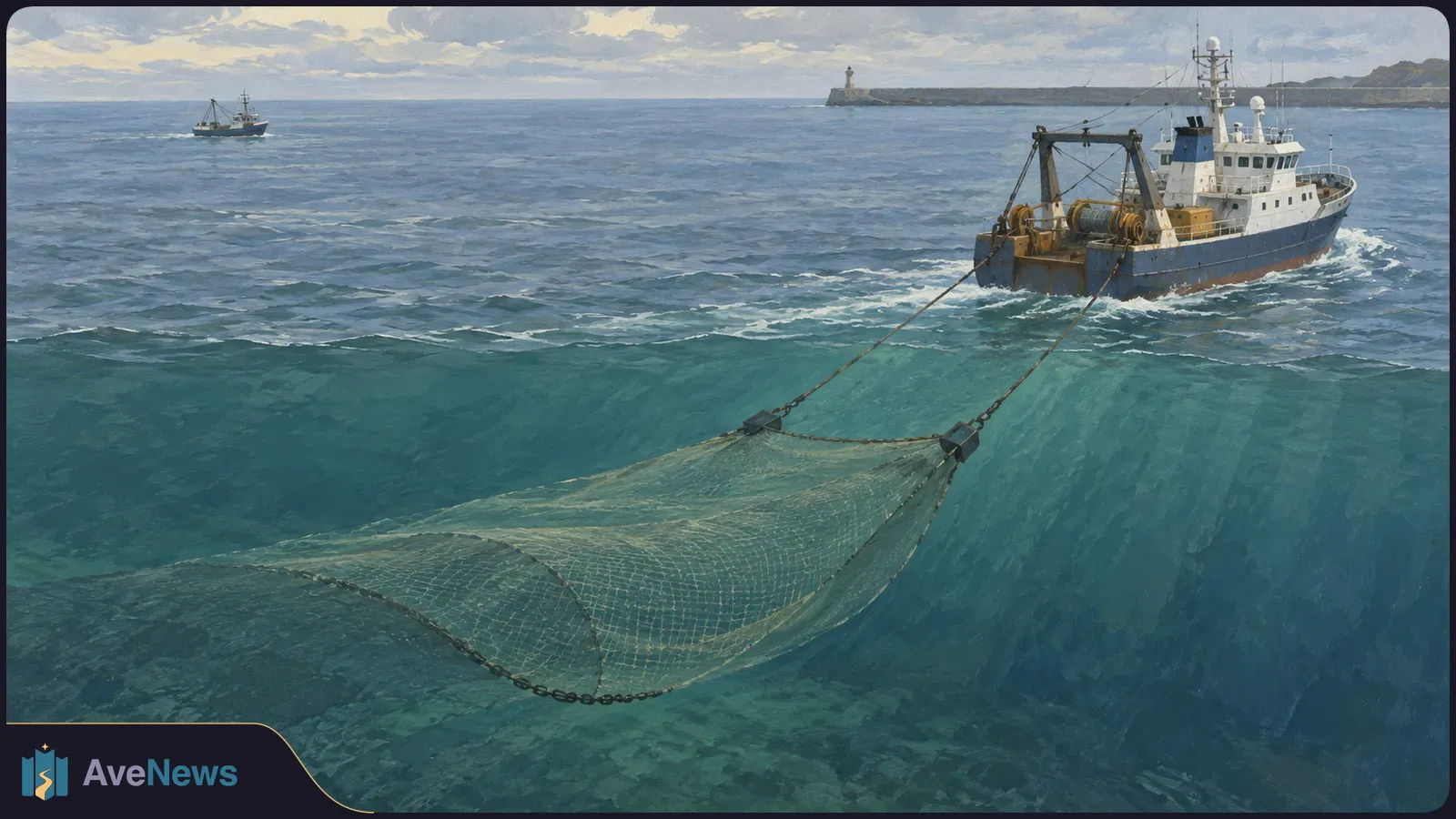
The French nonprofit wants EU funding to remove these vessels from fishing. An industry association argues that large boats can be efficient and sustainable.
The French nonprofit wants EU funding to remove these vessels from fishing. An industry association argues that large boats can be efficient and sustainable.
Just 638 vessels measuring at least 108 feet account for 55% of the fish caught by European vessels, according to a report by French nonprofit BLOOM described by Inside Climate News on October 1, 2026. They belong to a European-flagged fleet of 60,000 boats. BLOOM’s comparison also finds a large difference in fishing gear—a distinction that matters for unwanted catches and damage to seabed habitats.
| Vessel length | Share using towed gear |
|---|---|
| 108 feet or longer | 84% |
| Below 108 feet | About 17% |
Towed gear includes nets pulled through the water or along the seabed. Inside Climate News describes bottom-trawling nets and demersal seines, which catch fish near the seabed, as catching marine life indiscriminately and producing high volumes of bycatch: unwanted animals caught alongside the intended catch. Most smaller vessels instead use lower-impact, passive equipment that is not towed.
Léna Fréjaville, identified in the October report as BLOOM’s head of fisheries and the report’s lead author, links bottom trawling to scraping the seabed, destroying bottom habitats and disrupting the food web—the feeding relationships among organisms. The fleet comparison concerns both vessel size and gear use; it does not mean that every large vessel uses bottom-trawling nets.
The debate also concerns who receives public money and how many jobs fishing supports. In its account of BLOOM’s findings, Inside Climate News reports that industrial fleets received most European fisheries funding over the preceding two decades, while small-scale coastal fishers received 1%.
| Recipients | Share of funding |
|---|---|
| Industrial fleets | 80% |
| Small-scale coastal fishers | 1% |
For France, the article reports that artisanal, or small-scale, fishing generates ten times as many jobs as the large trawlers per equivalent quantity of fish caught. That is a comparison of jobs per quantity caught, not total employment across Europe.
The Pelagic Freezer Trawler Association, which represents eight fishing companies, argues on its website that large freezer trawlers are highly efficient and that this efficiency makes them sustainable. It says scientifically derived quotas—limits on how much fish may be caught—rather than vessel size determine how much its trawlers can fish.
The association also says about 70% of a ship’s capacity is usually reserved for sorting, processing and storage. Its quota argument addresses the amount of fish caught; BLOOM’s criticism also concerns the gear used and damage to marine habitats.
Inside Climate News places the debate alongside EU deliberations over an almost $8 billion fisheries budget for 2028–2034. BLOOM is calling for the European Parliament to spend $3 billion dismantling the large fishing vessels by 2035 and refitting them for other uses, such as goods transport. This is an advocacy proposal, not an announced EU decision.
The nonprofit wants the remaining budget split equally between conservation and small-scale fisheries. The article reports that ocean protection has received 2.7% of fisheries subsidies since 1994—a different period from the two-decade funding comparison.
Claire Nouvian, identified in the October report as BLOOM’s founder and director, advocates a maximum vessel length of 108 feet. She predicts that moving toward small-scale fishing would reduce pressure on fish populations, improve ocean health and increase catches over time. Those are projected benefits, not established outcomes. It is not yet clear how much the proposed transition would change catches, employment or habitat recovery.

Researchers compared 2019 posts with deforestation records, estimating a link with up to 420,000 acres cleared. The association does not prove that the messages caused the clearing.
2 min

The plan would protect 760 acres of wetlands and fund work to reconnect streams and floodplains. Public comments close October 16.
3 min

A layered model distinguishes cleaner surface ice from dust beneath it, with seasonal brightness changes helping explain what researchers observe.
2 min
