
Tracked Galápagos green turtles stayed within the marine reserve
Some used waters around several islands, supporting protection of connected coastal feeding areas. The small study does not rule out later breeding migrations.
Some used waters around several islands, supporting protection of connected coastal feeding areas. The small study does not rule out later breeding migrations.
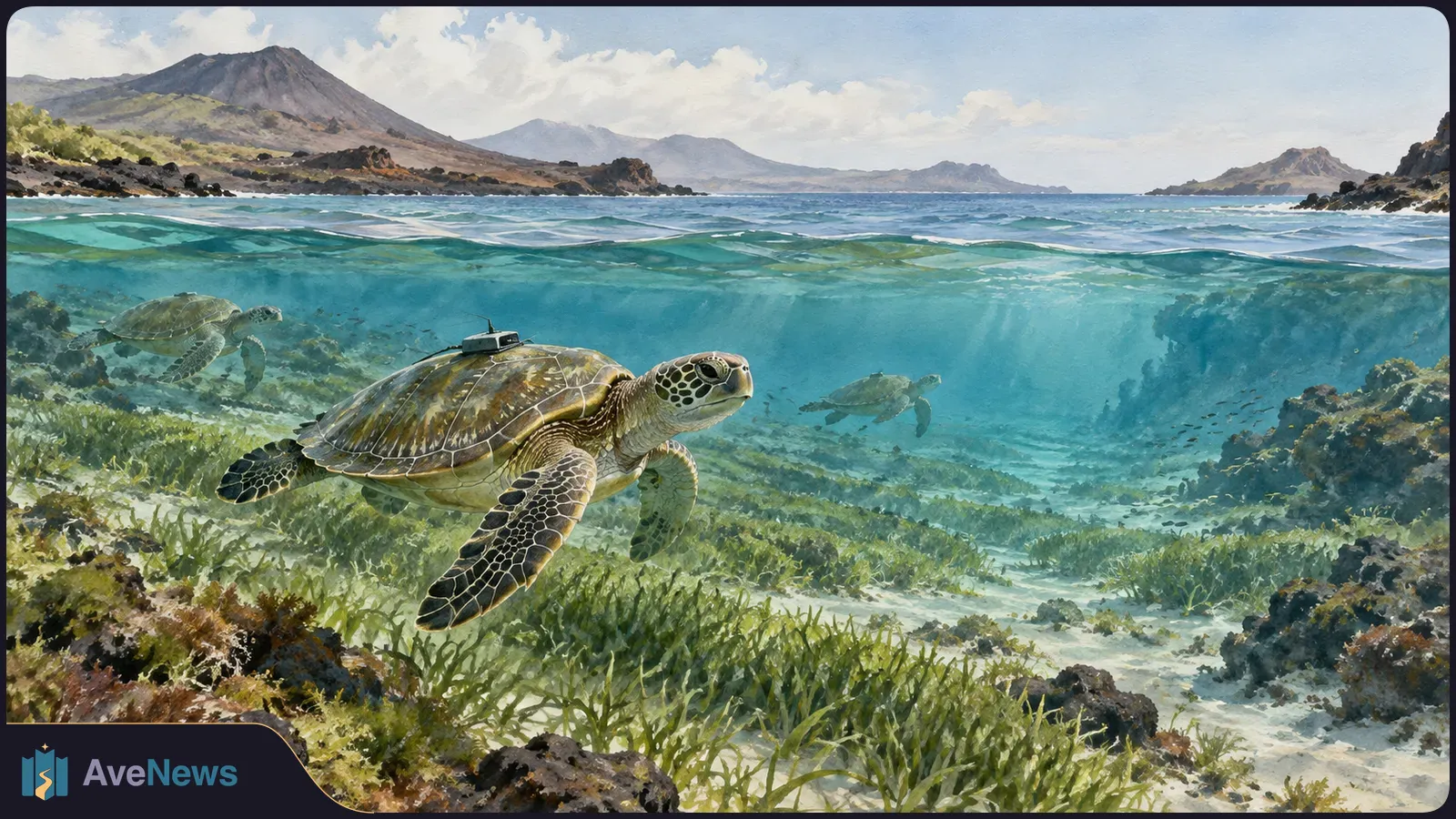
None of nine satellite-tagged yellow-morph green turtles left the Galápagos Marine Reserve during observation. Yet four traveled among islands. Researchers say those movements support protecting connected coastal feeding habitats, rather than only individual feeding sites.
The study, described by ScienceDaily on September 29 and published in Frontiers in Amphibian and Reptile Science, followed nine adults captured near four islands in 2015. Seven were male and two were female. Attached transmitters sent location signals through the Argos satellite network. The longest individual tracking period was 418 days; tracking generally ended when a transmitter detached or stopped sending signals.
Yellow and black morphs are genetically distinct forms of green turtle. The Galápagos is the only known place where both share the same waters. Adult green turtles eat mainly seagrasses and algae, making the places where they feed an important part of understanding their habitat needs.
The tracked turtles favored shallow coastal waters. Although they occasionally traveled as far as 25 km from shore, most stayed much closer to the islands. Five spent most of their tracking period near a single island. Others used several: the female nicknamed Ainoa traveled from San Cristóbal to Santa Cruz and then to Isabela. Observed movements between islands occurred only during the cooler April–October period.
For a turtle that feeds around several islands, protecting one favored location may leave other parts of its habitat unprotected. Corresponding author John W Rowe therefore called for maintaining feeding habitat across the islands. The researchers also emphasized protecting the routes turtles use between them.
The small, male-heavy sample and limited tracking periods leave room for long-distance journeys at other times. The researchers cautioned that the observations cover only part of the turtles’ lives and do not rule out later breeding migrations.
Coauthor Juan Pablo Muñoz Pérez noted that female yellow-morph turtles are not known to lay eggs on Galápagos beaches. He believes they will eventually leave to return to their natal beaches—the places where they hatched—in the western Pacific. That remains an expectation, not a journey observed in these tracking records.

Ancient light helps astronomers measure curvature. It cannot settle whether space continues forever or connects back to itself beyond our view.
3 min

The approximately $38 million award covers laboratory development and a planned lunar-surface demonstration for communications intended to support future Moon Base operations.
2 min

Researchers found genetic changes shared with human and dog cancers. Drug-response findings suggest a direction for further research, but came from tissue samples—not treatment trials in cats or people.
3 min