
Video shows humpback whale attending a dead newborn calf
The rare encounter offers a view of behavior researchers interpret as possible mourning, but the female’s motherhood and emotional state were not established.
The rare encounter offers a view of behavior researchers interpret as possible mourning, but the female’s motherhood and emotional state were not established.
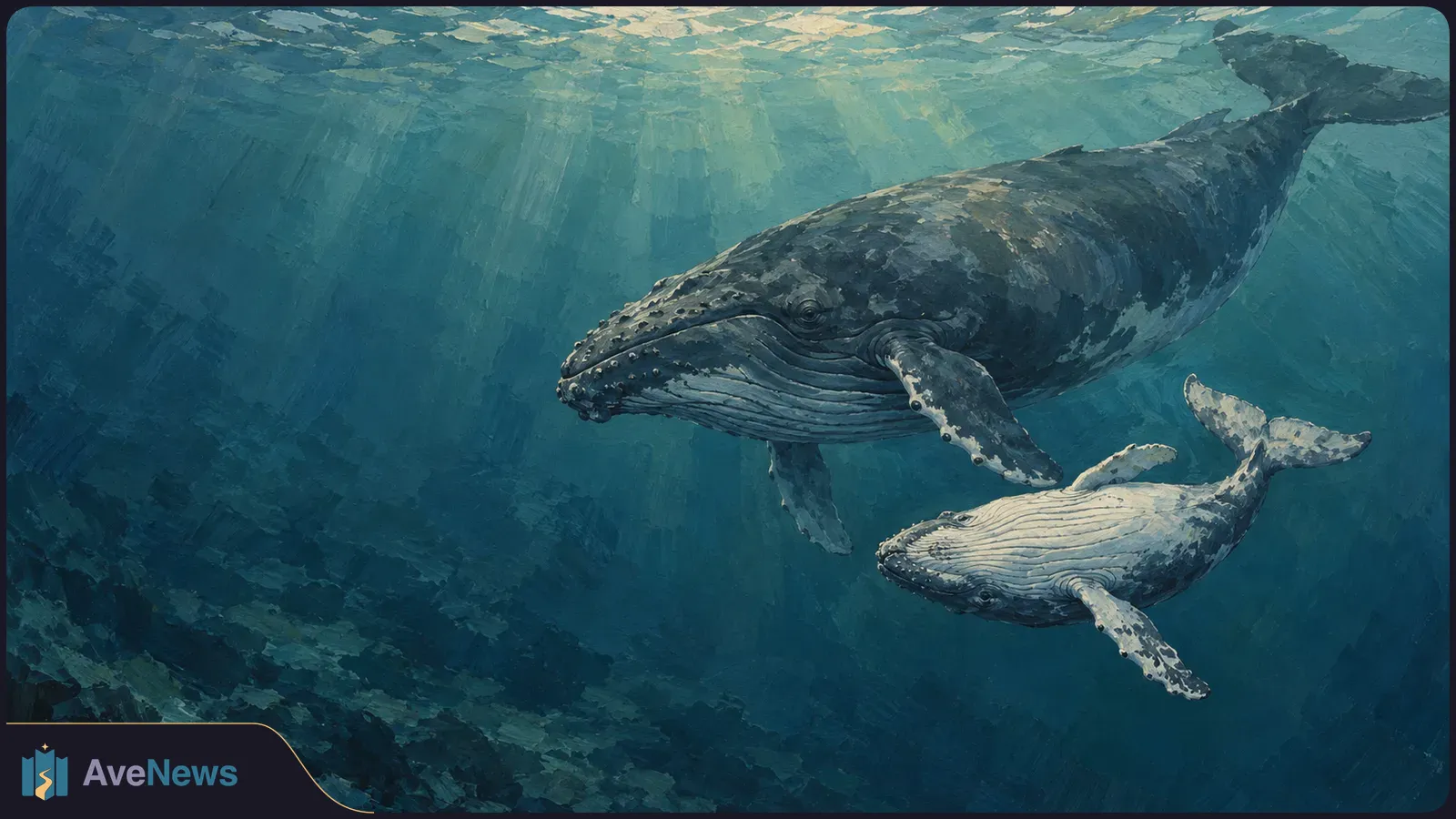
A female humpback whale was filmed repeatedly diving to a dead newborn calf on the seafloor off Queensland, Australia, in July 2025. The encounter offered a rare view of a humpback attending a calf after its death, according to Science News’s October 1, 2026 report.
Rescue boat captain Andrew Mulville, who works for the Australian marine animal rescue group Sea World Foundation, approached two adult humpbacks off Palm Beach. He saw a newborn calf, less than four meters long, on the seafloor.
Science News describes the female repeatedly diving down and making eye contact with the calf. Marine biologist Olaf Meynecke of Griffith University said she also placed a pectoral fin, or flipper, over the calf and rested beside it.
Some toothed whales, including orcas, have been observed spending long periods with dead calves, sometimes carrying them at the surface for days. Comparable behavior is rarely observed in baleen whales, the group that includes humpbacks.
Science News gives a possible explanation for that difference: newborn baleen whales lack the fat stores that would make their bodies float after death. If mothers spend time beside dead calves on the seafloor, people would have little chance of seeing the interaction. That could make the behavior difficult to document without showing how often it occurs.
Analysis
Meynecke and Mulville reported the encounter in Discover Animals on September 16, 2026, interpreting it as suggesting possible grief in baleen whales. The authors believe it is the first detailed documentation of a humpback attending a calf after its death.
The researchers believed the adults were the calf’s mother and her male escort, but those relationships were not established. Two adults were seen in the same area for two more days. Meynecke said he was very certain they were the same whales, while acknowledging that the researchers could not prove it. That uncertainty limits the interpretation that the female’s attendance continued across several days.
Meynecke described mourning or grieving as a possible interpretation, not an established emotional state. He also warned against drawing parallels with humans, emphasizing that whales experience and understand their surroundings differently. The encounter documents the female’s actions; it does not establish what she felt or how common the behavior is.

The assessment combines river conditions with biodiversity maps to identify conservation priorities, while finding a substantial protection gap for healthy streams.
3 min
Stable magnetic patterns in tiny iron particles may offer clues to the Moon’s past, but that use remains unproven.

Tradeoffs’ review of 166 nonprofit hospitals finds that only 10 guarantee full refunds, leaving some patients who qualify for free care unable to recover earlier payments.
2 min
7 min
