
Forest study reports larger trees after heavy thinning
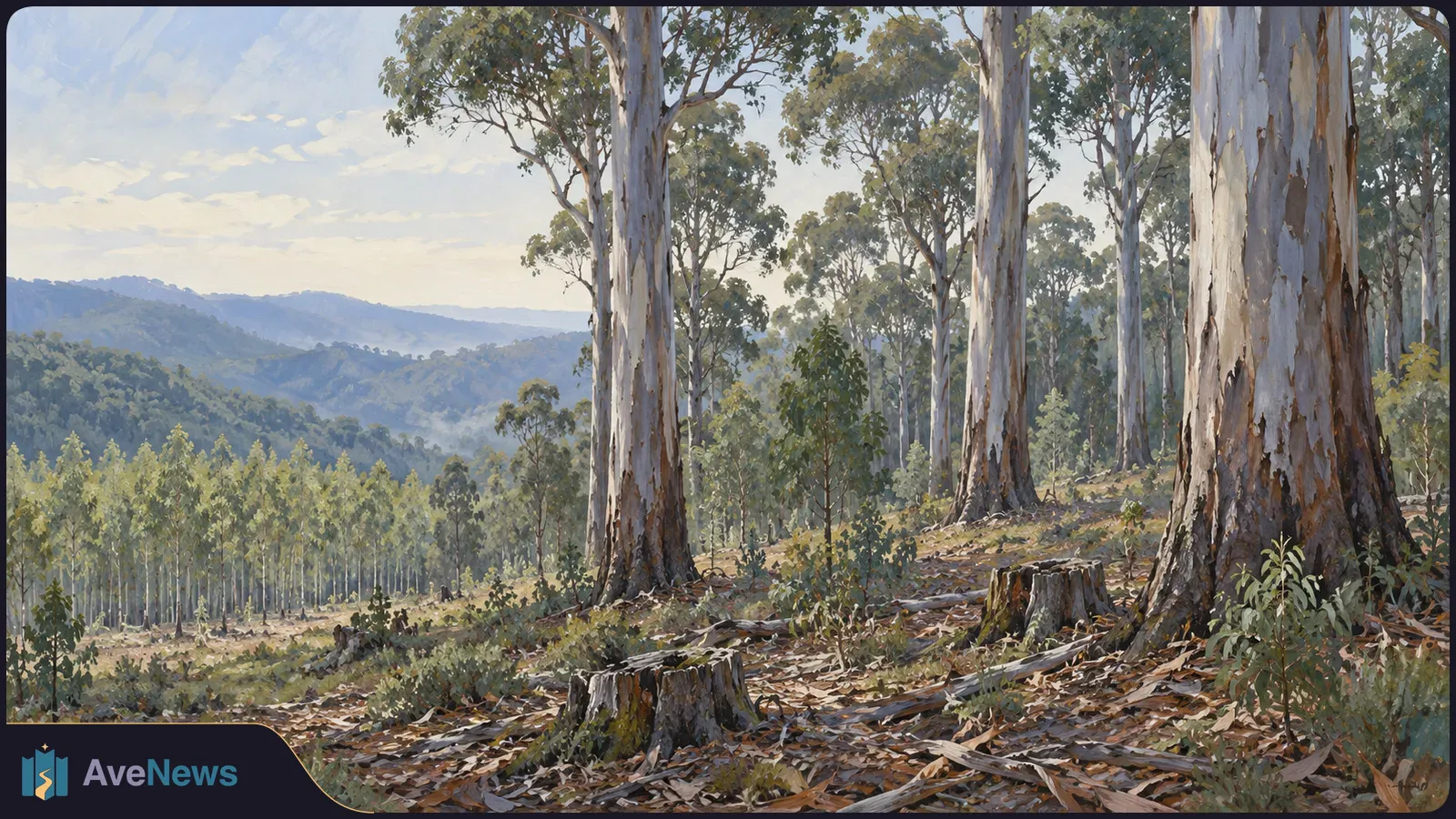
In Victoria’s mountain ash forest, clearing favoured regeneration, while researchers say heavy thinning produced larger retained trees and recovered wood carbon over 30 years.
In Victoria’s mountain ash forest, clearing favoured regeneration, while researchers say heavy thinning produced larger retained trees and recovered wood carbon over 30 years.
Heavy thinning in a Victorian mountain ash forest left trees that grew larger and, over roughly 30 years, stands that recovered the carbon removed by harvesting, researchers report. Yet clearing whole blocks produced the strongest regeneration of mountain ash. The comparison shows why growing new trees and developing the trees already standing are different management goals.
In their account published by ScienceDaily on October 4, the researchers describe long-term outcomes from the Silvicultural Systems Project at Tanjil Bren in Victoria’s Central Highlands. The project tested alternatives to clearfelling, which removes every tree in a block, alongside forest left unharvested.
The Victorian government established the project between 1987 and 1989 at Tanjil Bren and a second site, Cabbage Tree Creek in East Gippsland. At Tanjil Bren, the forest was dense mountain ash regrowth from the 1939 fires. Hundreds of survey plots were established and thousands of seedlings were monitored.
| Treatment | What happened to the trees |
|---|---|
| Traditional clearfell | All trees were cut in blocks 250–350 metres wide. |
| Small-patch clearfell | All trees were cut in smaller patches 50–140 metres wide. |
| Heavy thinning | Between 50% and 70% of trees were cut; the remaining trees were left standing. |
| Unharvested forest | Extensive areas were left unharvested as benchmarks for comparison. |
By the early 2000s, mountain ash had regenerated best on clearfell sites, the researchers report. Where tall trees remained overhead or cleared patches were small, lower-growing species such as acacia dominated. About 30 years after treatment, mountain ash remained vigorous and abundant in the large cleared patches and clearfelled areas.
Heavy thinning produced a different result. The researchers attribute the strong growth of retained trees to the extra space and resources available after neighbouring trees were removed. They report that the largest trees in thinned stands were 20% greater in diameter than the largest trees in the unharvested comparison areas—not that every tree was 20% larger.
The researchers describe those retained trees as about 80 years old. The largest averaged well over one metre in diameter, measured at chest height, and some exceeded 1.5 metres.
Analysis
The researchers report that heavily thinned stands stored as much or more carbon in their wood as the unharvested stands. Over 30 years, they say, the thinned forest recovered the carbon removed during harvesting and then matched the additional carbon gain in the unharvested areas. This result concerns carbon stored in wood, rather than establishing the total climate effect of harvesting.
The exact number of plots contributing to each comparison and the statistical uncertainty around the estimates are not yet clear. Nor is it clear how the carbon accounting treats carbon outside tree wood or emissions associated with harvesting.
Camera traps detected Leadbeater’s possums in every surveyed forestry-treatment plot, but none in the surveyed unharvested areas, the researchers report. They explain that acacia, which grew in most treatments, provides vegetation the possums use to forage and move through the forest. The detections show use of the treated plots; they do not demonstrate that treatment increased possum numbers or improved population survival. Non-detection does not establish that possums were absent from the unharvested forest.
The researchers also predict that the larger trees will be more likely to survive a future fire because larger trees resist fire better. That is a forecast, not measured fire survival in this comparison. They propose thinning as a possible tool for some forests affected by clearfelling or severe fire, while cautioning that it cannot—and should not—be used everywhere.

Nearly all the commercial fleet uses marine diesel. Fishermen also report slower regulatory responses and remain uneasy about trade ties with Canada.
2 min

Researchers tested paricalcitol alongside chemotherapy in 36 patients. The findings support further study of the drug, but do not establish a survival benefit.

The comparison involved 493 adults in a structured weight-management program. Its results do not prove that the drinks have equivalent effects or establish comprehensive safety.
3 min
3 min