
TLS study finds guideline gaps for newer connection options

Researchers found both newer post-quantum methods and insecure ciphers outside the evaluated recommendations. Their network tool can report or block connections.
Researchers found both newer post-quantum methods and insecure ciphers outside the evaluated recommendations. Their network tool can report or block connections.
A study of more than 50 million Transport Layer Security (TLS) handshakes—the exchanges that establish secure Internet connections—found both newer post-quantum options and obsolete ciphers classified as insecure missing from four national guidelines. The researchers described their findings on APNIC Blog on September 29, 2026.
TLS protects Internet communications, but its security depends on the settings used. Guidelines establish a recommended configuration baseline rather than assess every possible option. A connection that falls outside those recommendations is therefore not necessarily insecure—a distinction that matters when administrators use guidelines to decide which connections to block.
The researchers anonymously tracked connections from users at one research institution to external servers over two weeks. They compared three server-selected settings: the TLS version, cipher suites specifying cryptographic algorithms, and supported groups used for key exchange. The comparison covered guidelines from Italy’s ACN, France’s ANSSI, Germany’s BSI and the United States’ NIST.
The most frequent unmentioned option was X25519MLKEM768, a post-quantum group used in nearly 6.85 million handshakes. Post-quantum cryptography is designed to resist attacks using quantum computers. The researchers placed these newer options in a different category from the insecure RC4-based cipher suites in their results.
| Value | Setting | Researchers’ category | Handshakes |
|---|---|---|---|
X25519MLKEM768 | Supported group | Post-quantum cryptography | 6,845,778 |
| FB’s TLS 1.3 draft 26 | TLS version | Facebook’s TLS library | 61,899 |
X25519Kyber768_Draft00 | Supported group | Post-quantum cryptography | 45,658 |
TLS_RSA_WITH_RC4_128_SHA | Cipher suite | Insecure ciphers | 617 |
TLS_DH_anon_WITH_RC4_128_MD5 | Cipher suite | Insecure ciphers | 234 |
These findings describe one institution’s traffic during the collection period, not global TLS use. The researchers also say the evaluated guidelines were updated in the months after their research; the comparison should not be read as an assessment of the revised recommendations.
The researchers developed TLSGatekeeper to enforce connection policies at the network level rather than configure every device separately. They describe that device-by-device task as difficult in large organisations, where personal smartphones and self-managed workstations can sit outside the IT department’s direct control.
TLSGatekeeper checks the settings a server selects during a handshake against an administrator’s chosen policy. Administrators can define unwanted values or apply guideline-based rules, then choose whether to report a non-compliant outbound connection or block it. The tool inspects only handshake packets and does not decrypt connections, preserving end-to-end encryption.
The team implemented TLSGatekeeper using eXpress Data Path (XDP), which runs packet-processing code directly at the network interface driver. In their own performance evaluation, the researchers report throughput near 100 gigabits per second while processing thousands of TLS handshakes per second. They report the following average inspection delays under 100-gigabit-per-second traffic.
| TLS version | Delay per handshake packet |
|---|---|
| TLS 1.3 | 671 nanoseconds |
| TLS 1.2 | 795 nanoseconds |
The researchers have made the dataset available to other researchers. They call for continuous monitoring of deployed TLS settings and faster guideline updates as new options gain use—work that would help administrators keep the policies enforced by tools such as TLSGatekeeper current.
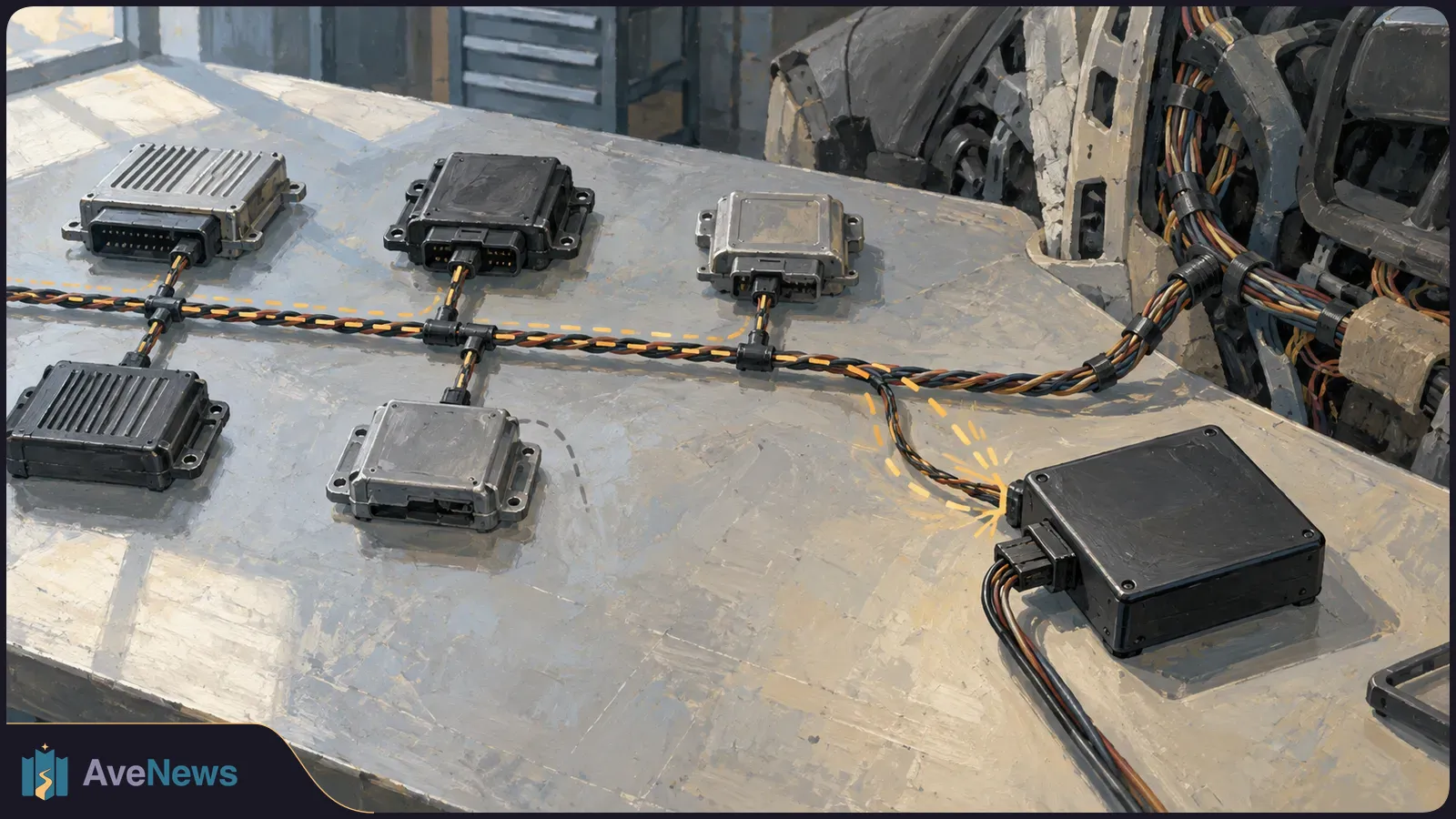
Researchers tested the vehicle-network standard on commercial hardware. The demonstrated attacks require prior control of a computer connected to the vehicle’s internal network.
3 min

Amazon will license more chip designs and engineering software, while Synopsys will adopt AWS services and optimize simulation tools for Amazon chips.

Models trained on past faults helped prioritize problems in a network with 10 million customer endpoints, but key details needed to assess the reported accuracy were not provided.
2 min
2 min
