
Edinburgh’s Palm Houses reopen after six-year restoration
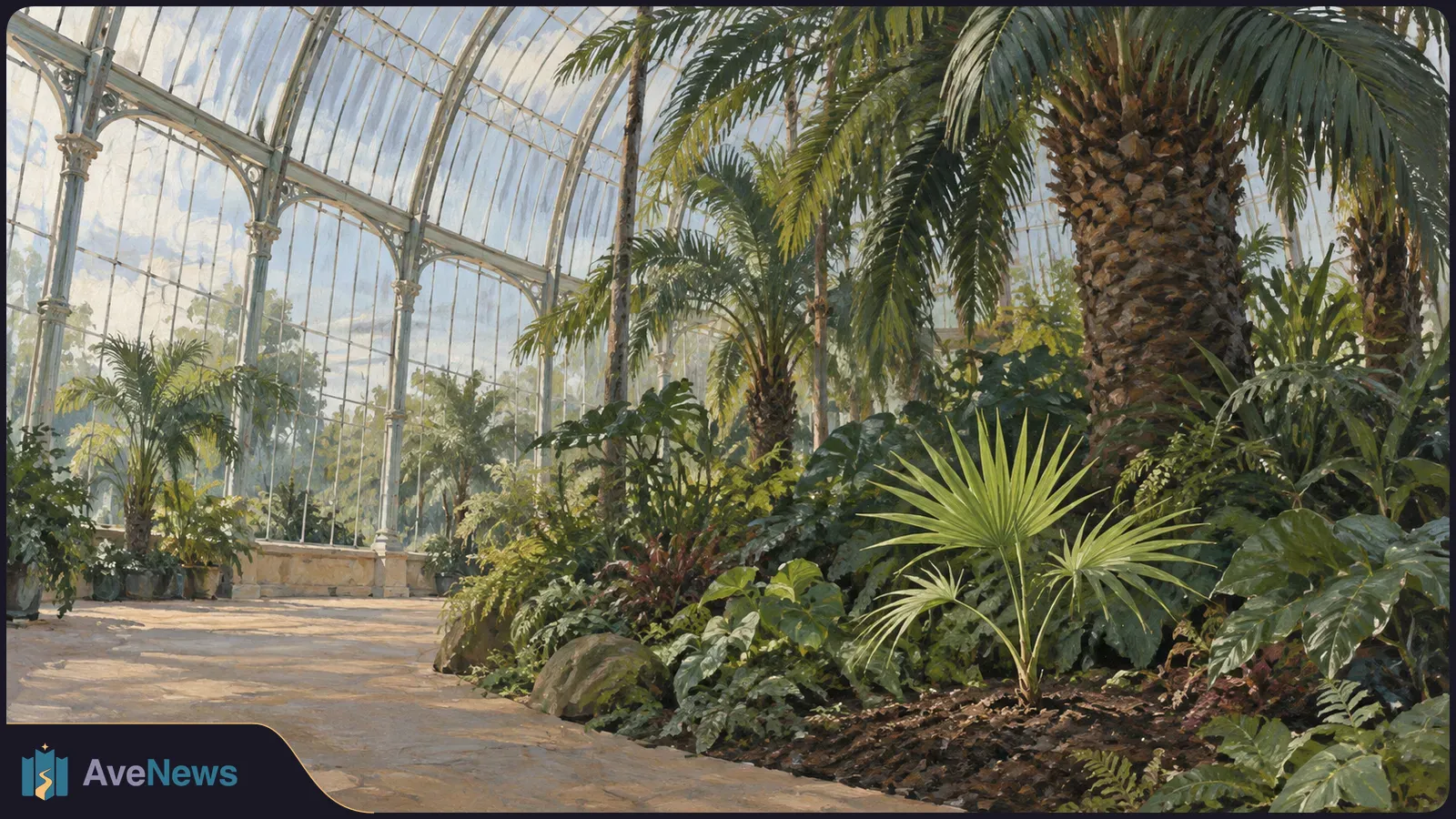
Hundreds of plants returned after repairs to the leaking, rusty glasshouses, but a palm more than 200 years old was replaced by a seedling.
Hundreds of plants returned after repairs to the leaking, rusty glasshouses, but a palm more than 200 years old was replaced by a seedling.
The Palm Houses at Edinburgh’s Royal Botanic Garden have reopened to the public after six years of restoration. Hundreds of plants were moved into temporary homes so the leaking, rusty 19th-century glasshouses could be repaired, then carefully returned to the renovated space, the BBC reported.
The work replaced more than 5,000 glass panes and repaired and repainted the corroded ironwork. Stonework was also renovated, and a partition wall between the two houses was removed to create a more open space around the plants and historic architecture.
Relocating the collection carried risks. Glasshouse curator Sadie Barber explained that digging a plant out of the ground and putting it into a pot causes stress. Staff were particularly concerned about moving the largest plants and keeping them elsewhere for several years.
Barber said the plants had come through the move well and were already thriving after their return. She pointed to new growth on some of the replanted plants, including fresh fern leaves beginning to unfurl. The BBC reported that the vast majority of the displaced plants survived, without giving a survival percentage.
The collection’s importance extends beyond its public display. Professor Julia Knights, the garden’s Regius Keeper, said it includes endangered species and plants extinct in the wild. She said the Palm Houses help protect those plants.
One major loss was the Sabal palm, which was more than 200 years old. It had grown too tall for its glasshouse and could not be stored elsewhere, so it had to be cut down. David Knott, the garden’s director of horticulture, said there was no way to transplant it.
Staff retained some of the old palm’s seedlings, and one of its descendants is growing in its place. Knott said the seedling had been planted in a glasshouse slightly taller than the one its parent occupied, and he hoped that extra height would allow it to last longer.

A returned sample combines inner- and outer-Solar-System signatures. Researchers propose that dust gathered near the boundary where water froze.
3 min

A model that lets elements spread unevenly matches unusual stars’ chemistry, offering an alternative to exceptionally energetic explosions without ruling them out.
3 min

Observations over the Sand Creek fire showed how rising, fire-heated air formed a cloud cap and helped researchers connect surface burning with cloud structure.
4 min
