
Skull injuries add evidence for possible sacrifice in early Egypt
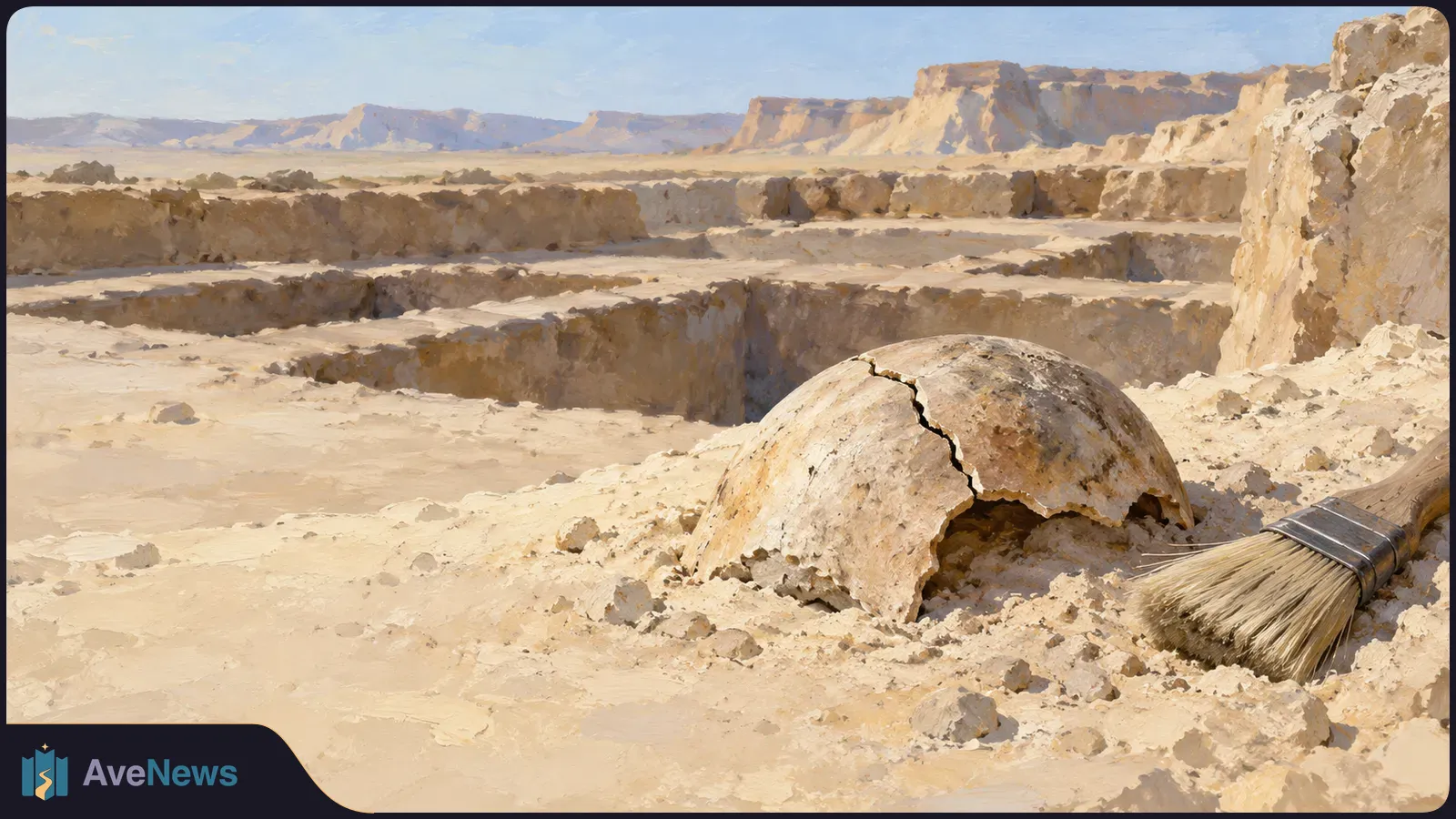
A re-examination found potentially lethal injuries in 18 of 46 skulls from royal-household graves, but cannot establish how widespread sacrifice was.
A re-examination found potentially lethal injuries in 18 of 46 skulls from royal-household graves, but cannot establish how widespread sacrifice was.
A re-examination of 46 skulls from early Egyptian royal-household graves has found signs of potentially lethal injuries in 18. The findings add evidence that some people serving the rulers may have been sacrificed when their ruler died, according to a Guardian report on research by Roselyn Campbell of Purdue University. They do not establish that every person buried around the royal monuments was sacrificed.
Campbell’s study, published in Frontiers in Environmental Archaeology, examined skulls held in the University of Cambridge’s Duckworth Collections. They came from graves around the funerary enclosures—areas associated with royal burials—of King Djer, King Djet and Queen Merneith at Umm el-Qa’ab, near Abydos.
The cemetery contains tombs and enclosures of Egypt’s First Dynasty rulers dating as far back as 3000 BC. Surrounding graves are thought to belong to retainers, people associated with the royal households, including officials and craftspeople. Campbell noted that Aha, the dynasty’s first ruler, appears to have had only a few such burials, while his successors had hundreds around their tombs and enclosures.
English Egyptologist Flinders Petrie excavated the retainer graves in the 1920s and interpreted them as evidence of human sacrifice. But he found no evidence of injuries and suggested that the people might have been buried alive. Other experts proposed a different explanation: the retainers died naturally and were later reburied at Abydos when their ruler died.
Campbell interprets the skull fractures as injuries sustained around the time of death, rather than damage that occurred later. That distinction matters: later damage would not show that a person suffered violence around death. She believes Petrie may have seen the fractures without recognising when they occurred.
The injuries included fractures and, in one skull, a chopping injury to the eye. Campbell considers the fractures more likely to have been caused by flat, wide objects made of wood or antler than by a mace, a weapon often shown in ancient Egyptian art.
Salima Ikram, a professor at the American University in Cairo, told the Guardian that the sacrifice hypothesis was not new. She described the paper as one of the few studies to apply rigorous current methods to these remains.
Dawn McCormack, an Egyptologist at Samford University in Alabama, also noted the small number of skulls examined. She considered it plausible that some people at the site had been violently killed, noting that similar sacrifices had occurred in other cultures and periods. Her assessment does not establish that all the retainers were sacrificed.
Campbell says sacrifice cannot be established for the skulls without injuries: some retainers may have been sacrificed while others were not. The 46 skulls are a small sample of the original burial population and may not represent all the retainers. How widespread sacrifice was, and the full extent of these funeral rituals, therefore remain uncertain.

NASA’s Saririaky photograph illustrates how the same rock type can record underground cooling and later deformation on Earth, but crust formation on the Moon.
2 min
Researchers found that proteins used to join cells also help them engulf dying cells. Experiments in zebrafish and mouse embryos reveal a role for both force and flexibility.

NASASpaceflight attributes the choice to payload mass and the required trajectory. The payload’s mass, identity and exact orbit remain classified.
3 min
2 min
