
Dangerous heat stress covered a record 52% of Europe in summer 2026
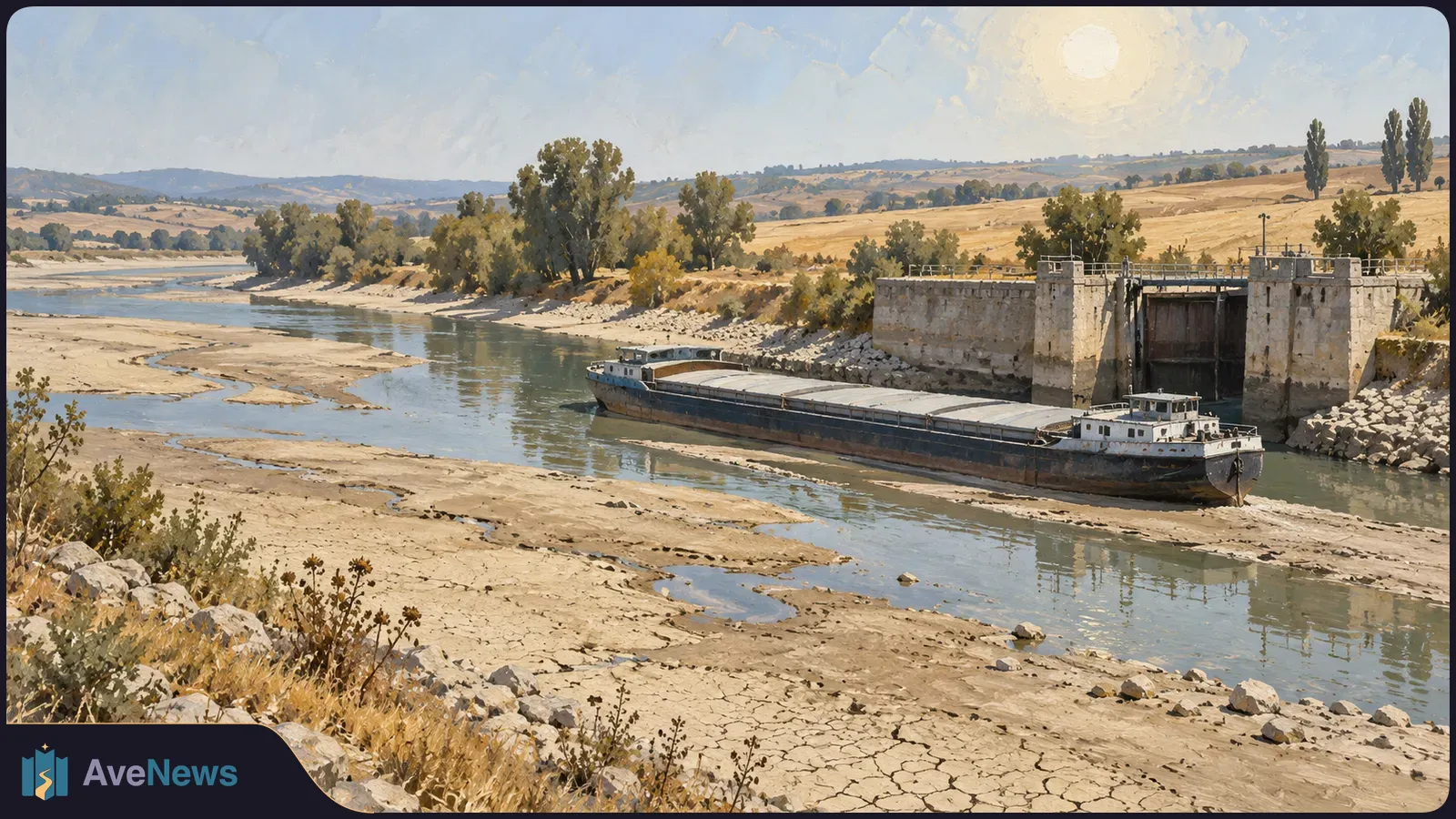
Record-low river flows, widespread drought and severe fire weather added pressure on transport, crops and water supplies.
Record-low river flows, widespread drought and severe fire weather added pressure on transport, crops and water supplies.
Dangerous heat stress extended across a record 52% of Europe during summer 2026, according to an October 2 assessment from the European Union’s Copernicus Climate Change Service reported by Inside Climate News. The May–August period also brought record-low flows in many major rivers and widespread losses of food crops, including grain.
These were overlapping pressures, not just temperature records. Samantha Burgess, a climate expert at the European Centre for Medium-Range Weather Forecasts, said the summer’s combined extremes affected water supplies, energy systems, transport, ecosystems, agriculture and human health.
Heat stress measures how temperature, humidity, wind and sunshine together affect the body’s ability to cool itself. It is not simply an air-temperature reading. As the heat-stress index rises, regulating body temperature becomes harder, Peter Hoffmann, a senior scientist and meteorologist at the Potsdam Institute for Climate Impact Research, told Inside Climate News.
Western Europe’s June–August surface air temperatures were 2.5°C above the recent decadal average, the Guardian reported on October 2, citing the Copernicus update. That comparison concerns western Europe, not the whole continent, and uses a recent ten-year average rather than a pre-industrial baseline. Europe as a whole had its third-hottest summer on record.
The assessment also counted days when at least 60% of western Europe exceeded 30°C. The 2026 total surpassed both 2003, a landmark European heatwave year, and 2025.
| Year | Days |
|---|---|
| 2026 | 17 |
| 2003 | 11 |
| 2025 | 7 |
The hot season also stretched beyond summer. In both May and September, more than 40% of Europe experienced temperatures of 30°C, Inside Climate News reported.
The Loire, Seine, Rhine, Glomma, Vistula and Danube recorded their lowest summer-average flows on record at their outlets. Across 12 major river systems, total discharge—the volume of water flowing through them—was about 69 cubic kilometres below the long-term mean. That shortfall was equivalent in volume to roughly two years of public water supplies across the EU; it was not a measure of water actually lost from public supplies.
By the end of August, around 46% of European land was experiencing drought. Around 40% of that drought-affected area—not 40% of all European land—was classified as under extreme drought. Inside Climate News reported widespread crop losses, but the scale of those losses is not yet clear.
Fred Hattermann, an expert on climate-related water risks at the Potsdam Institute, pointed to transport disruption caused by low river flows as evidence that Europe was falling behind in adapting to climate change. He also cited wildfires that burned out of control in France.
The severity of weather conditions favouring fires in 2026 was the worst recorded, according to European Forest Fire Information System data reported by the Guardian. This measures fire weather, not the amount of land that burned. By the end of September, the burned area ranked third in the record.
| Year | Area burned, hectares |
|---|---|
| 2026 | 680,000 |
| 2025 | 1,000,000 |
| 2022 | 768,000 |
Wildfire smoke released 30% more fine particulate matter—tiny airborne particles that pose a health hazard—than the average over the previous two decades, the Guardian reported. This was a comparison of particle emissions, not a measure of individual exposure or illness.
Inside Climate News reported that rapid climate-attribution studies found human-caused warming made the summer’s heatwaves hotter and more likely. These studies estimate how warming changes an event’s likelihood or intensity. An analysis of the June heatwave led by World Weather Attribution scientists found that warming raised daytime highs by nearly 4°F.
Hattermann’s assessment was that adaptation investment existed but was often fragmented and poorly coordinated across regions. With climate change advancing rapidly, he said, measures were proving difficult to put in place quickly enough.
An international coalition recommends stricter conditions for animal testing, but its statement does not itself change national rules.
2 min

Parliament seeks a longer pause than the European Commission’s earlier one-year proposal. Some obligations could move to 2030 if other EU institutions agree, but the vote itself does not change legal deadlines.
3 min
Officials linked at least 32 deaths mainly to measles and malaria, possibly worsened by malnutrition and delayed care. Individual causes remain uncertain.
4 min

