Armenian court extends ex-minister Gagik Khachatryan’s detention by two months
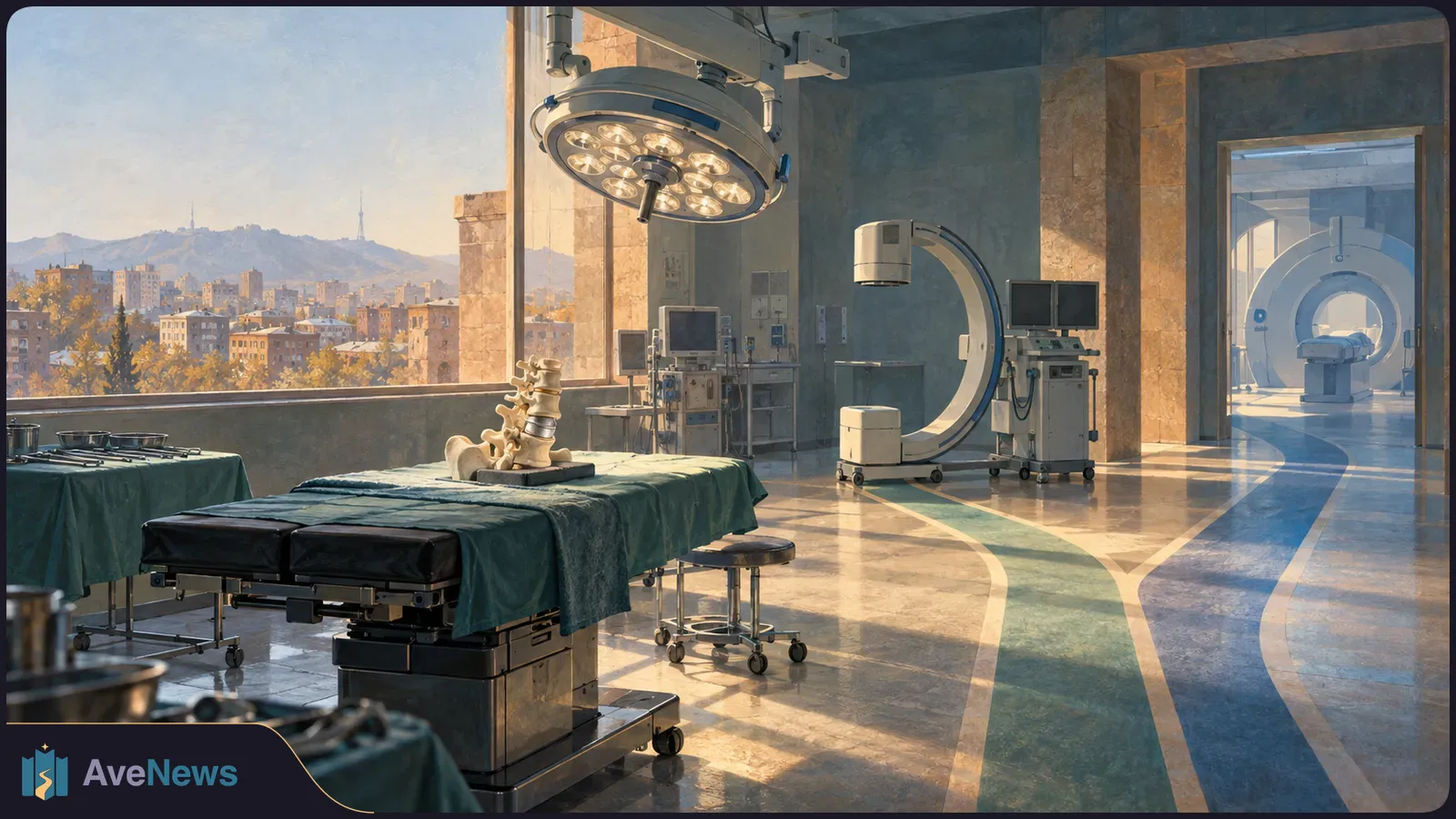
The court extended the former Armenian finance minister’s custody by two months. His German surgeon says he urgently needs spinal surgery abroad, while state experts dispute the need and say an indicated operation could be performed in Armenia.
An Armenian court extended former finance minister Gagik Khachatryan’s detention by 2 months, according to reports on 29 October 2026. The decision followed his renewed detention in a criminal case and a dispute over whether he needs surgery abroad.
Khachatryan also formerly chaired Armenia’s State Revenue Committee. Azatutyun described him as a former influential official known as a “super-minister.” He has faced trial since 2019 on economic and corruption charges, separately from the newer case in which he was detained again in 2026.
His German surgeon says Khachatryan urgently needs surgery at the surgeon’s clinic. State-appointed experts concluded that surgery had not been necessary and that, if indicated, it could be performed in Armenia.
The court also permitted Khachatryan’s wife and daughter to visit him in custody, Azatutyun said. His lawyer, Yerem Sargsyan, said previously only his lawyers had visited. Sargsyan said Khachatryan had developed bedsores after being confined to bed.
Sargsyan said he had sought house arrest so Khachatryan could receive treatment, family care and visits from doctors, with exercises intended to improve muscle weakness. He said the bedsores were at an early stage but warned that deeper sores could become open wounds, allowing potentially fatal infections, and that prolonged confinement to bed also posed a risk of pneumonia. Azatutyun said the Health Ministry requested a written inquiry for clarification about these concerns.
The hearing was closed, and Azatutyun said it could not review the investigators' or court’s reasoning for detention. Sargsyan said investigators argued that Khachatryan could obstruct the case if free, but challenged that rationale: in the previous two months, he said, authorities had only conducted inspections and ordered examinations that Khachatryan could not have obstructed even if he had wanted to.

Civic.am, a news site close to the governing Civil Contract party, also reported the two-month extension and said the detention application concerned accusations of taking bribes, embezzling money, unlawfully disposing of property and concealing the criminal origin of money. Armenia’s Prosecutor General’s Office said a prosecutor amended and supplemented charges begun on 7 June 2026, and initiated an additional prosecution on 29 August 2026. The accusations are not findings of guilt.
In the newer case, investigators seized 70 paintings and icons from Khachatryan’s home and entrusted them to Armenia’s National Gallery. The Education, Science and Culture Ministry said investigators had authorized the display, that the gallery had not sought profit and that it moved the works to a separate space after seven days. Azatutyun reported that the gallery received no revenue from the display. The Investigative Committee said entrusting the works to the gallery had resolved their custody; Sargsyan objected that custody did not confer a right to exhibit someone else’s property. His lawyers said they had sent complaints about property rights to various bodies.
Khachatryan’s lawyers said an earlier detention decision took about a month to reach them, preventing an appeal during that delay. They described his detention as torture.
Khachatryan has spinal stenosis, a narrowing of the spinal canal that presses on the spinal cord and nerve roots and causes pain and numbness. In its September 30 report, Azatutyun described him as 70 and said he had gone from walking into court to using a wheelchair and then arriving on a stretcher with doctors and police. His doctors warned that he could become disabled without surgery.
German surgeon Nils Hansen-Algenstedt operated on Khachatryan in 2018, placing an implant intended to preserve movement in his neck. The surgeon said a 2021 MRI scan showed the stenosis had returned, although there was still space around the spinal cord.
State examinations have produced conflicting findings since 2020. Before 2025, experts maintained that Khachatryan needed surgery that could not be performed in Armenia. Prosecutor Artur Danielyan said the same state-appointed specialists concluded in 2026 that surgery was unnecessary or could be performed in Armenia if needed. Investigators opened proceedings to establish why the findings differed.
The lawyers pointed to one expert who concluded in 2022 that Khachatryan needed surgery and that his German surgeon could perform it in Armenia with his own instruments, but later concluded surgery was unnecessary. The expert declined to explain the change, citing medical confidentiality. Sargsyan said the latest panel had not disputed Khachatryan’s illnesses, only the need for surgery and where it could be performed.
The Prosecutor General’s Office said it received the results on 24 August 2026, from examinations ordered on 19 June 2025, and 22 June 2026. It said the experts found no health condition preventing Khachatryan from participating in criminal proceedings.
Hansen-Algenstedt said measurements by colleagues in Armenia showed a significant deterioration. Prime Minister Nikol Pashinyan accused Khachatryan of faking illness to evade justice; the surgeon rejected that explanation, saying mobility problems could be simulated but neurological test findings could not. The Health Ministry did not permit Hansen-Algenstedt to examine Khachatryan in prison when he traveled to Yerevan before the September report.
Sargsyan read an earlier expert conclusion saying a repeat operation on the disc implant required its matching instrument set, which appeared unavailable in Armenia. The conclusion said sets for different implant types were not interchangeable and that this implant type was not used in Armenia.
Hansen-Algenstedt said a 2024 visit established that he could not perform the same operation in Yerevan. He described Armenian doctors as highly skilled but said equipment shortages increased risks and threatened the outcome. He said he could not bring all the equipment himself, including a special operating table and a CT scanner used during surgery, for which hospitals must be designed.
The Health Ministry said discussions with its adviser Sevak Badalyan established that Armenian clinics had the equipment to remove a spinal implant or perform repeat surgery. It said CT scanning during surgery was unavailable, but checking an implant’s position with X-rays was an accepted worldwide standard. The German doctors said CT was essential to measure pressure on the spinal cord during surgery and that restoring Khachatryan’s ability to walk fully required optimal conditions.
Azatutyun said Khachatryan had made 13 short, court-authorized trips to Germany for physiotherapy since his trial began and returned each time. Sargsyan cited those returns to dispute suggestions that he would flee. A court allowed him to travel abroad for surgery in 2025, but prosecutors brought a new charge that blocked his departure.
Khachatryan was detained again after the latest expert examination. Prosecutors said he refused another MRI; Sargsyan said he refused because his condition worsened after each scan and he had undergone them annually. The prosecution’s medical experts said the need for surgery could be considered after an MRI.
On 23 September, Smile was approved to begin science operations. Its ultraviolet camera is already recording the northern lights. Its X-ray camera is still picking up too much stray light, and ESA expects that to ease by mid-October.
4 min

Scientists expected lake sediments at the old shoreline of a Martian crater. NASA's rover found igneous rock instead, and it records groundwater, lake water and later hot fluids.
4 min

Lily Grigoryan moved from the US to Armenia in 2024 and planned to stay. She told Hetq she went back because Armenian pharmacies could not reliably supply medicines for her autoimmune diseases. Of the 10 medicines she needs, only three were easy to find.
4 min