
3D images reveal magnetic vortices inside ancient fossils

The 97-million-year-old particles have magnetic properties that researchers think could support navigation. Their maker and biological function remain unknown.
Researchers have produced the first three-dimensional images of the magnetic structure inside giant magnetofossils—microscopic magnetic structures believed to have a biological origin. The images reveal vortex-shaped magnetism that the researchers interpret as potentially useful for navigation, rather than proof that an ancient animal used the particles to find its way.
ScienceDaily reported the findings on October 2. The study, by researchers from the University of Cambridge and Helmholtz Zentrum Berlin, was published in Communications Earth & Environment. The examined fossils came from North Atlantic seafloor sediments and date back 97 million years.
The team used magnetic tomography, a technique that maps internal magnetism in three dimensions. It showed how magnetic moments—the tiny magnetic fields associated with spinning electrons—are arranged throughout the fossils. Those moments spiral around a central line, forming a pattern resembling a tornado.
Conventional X-rays had not penetrated these large particles effectively enough to produce such images. The measurements became possible through a technique developed by co-author Claire Donnelly at the Max Planck Institute in Germany and were carried out at the Diamond X-ray facility in Oxford.

| Particle | Reported size |
|---|---|
| Bacterial magnetic particles | 50–100 nanometers wide, according to study co-leader Rich Harrison |
| Giant magnetofossils | Roughly 10–20 times bigger than bacterial magnetic particles |
Scientists had previously suggested that the unusually large fossils might have served as protective spines. Computer simulations hinted at more complex magnetic properties, prompting the team to investigate their internal structure.
September tests checked the stability needed to observe faint planets, but the coronagraph’s first images showed stars—not planet detections.
3 min
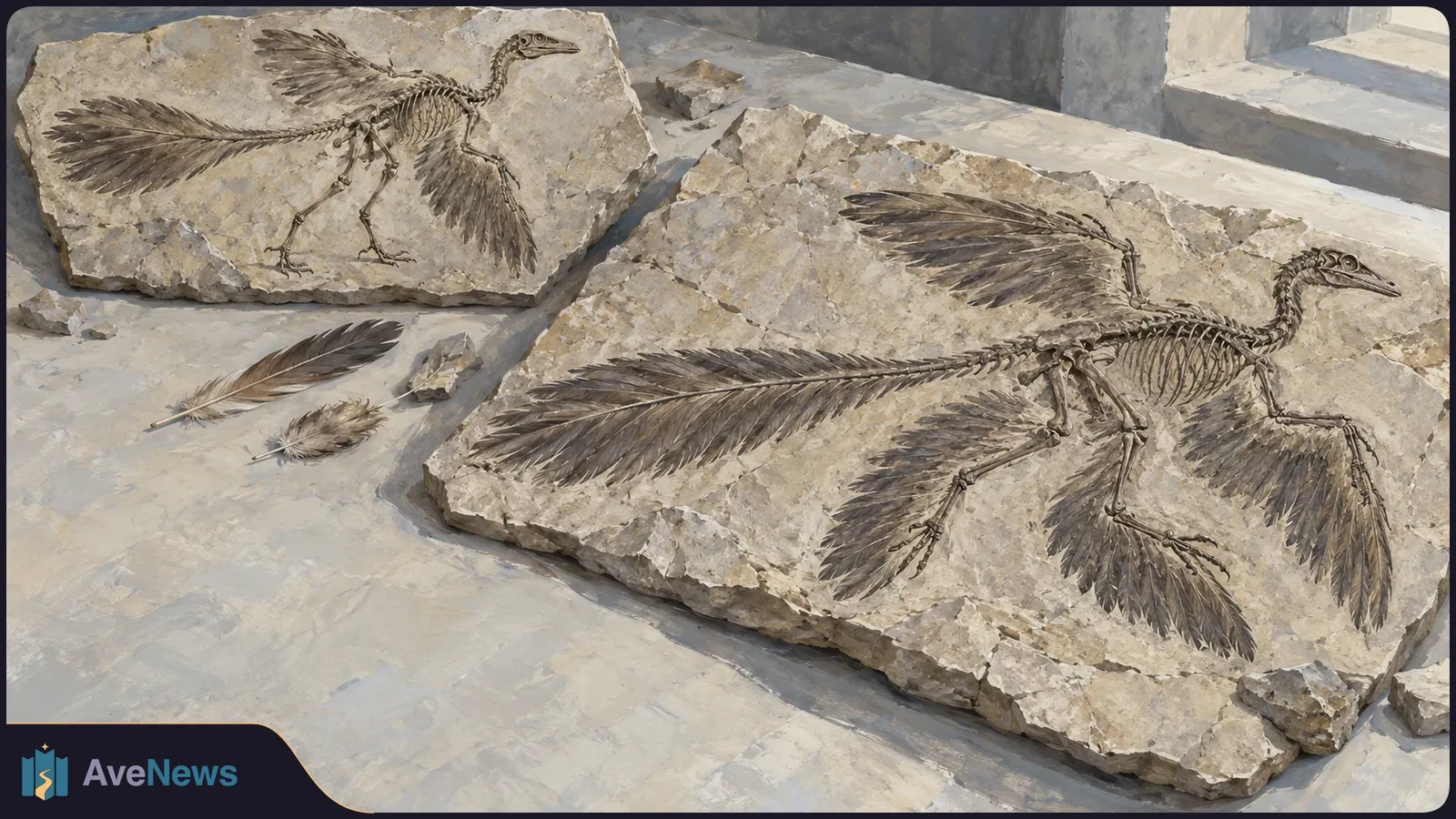
A comparison found that microraptorines and the bird lineage shared some flight-related traits, but acquired them in different orders.
2 min

The October 1 retraction notice says unintended RNA splicing likely produced the signal that the 2014 study interpreted as frameshifting.
2 min